


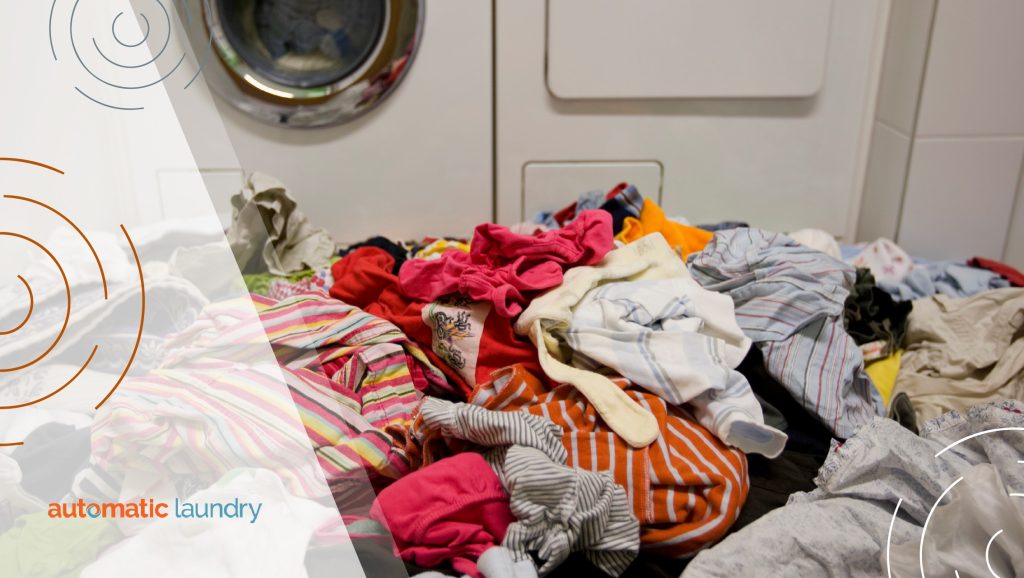
It’s easy to treat laundry day as something to complete quickly rather than carefully. A week’s worth of clothes piles up, and stuffing everything into a single cycle feels efficient. For many residents living in shared laundry environments, saving time is the priority, not evaluating drum space or fabric weight. Yet the long-term cost of oversized loads is much greater than most people realize. Within residential laundry rooms across apartments and dorms, overloading machines is a leading cause of washing machine maintenance including equipment breakdowns, inefficient cleaning, and avoidable service requests. Machines are designed for a specific capacity, and exceeding that threshold affects performance in ways that aren’t always visible right away.
Laundry technicians and property managers frequently point out that damage from repeated overloading shortens machine life and increases downtime for all residents relying on the facility. A washer forced to operate beyond its intended load weight strains its bearings, suspension system, and motor. Over time, that strain escalates into vibration issues, leaks, and costly internal failures. As more buildings adopt better systems for washing machine maintenance, residents play a direct role in preserving equipment through simple habit changes. A slightly lighter load today prevents a service outage tomorrow—and that awareness makes the whole community run more smoothly.
1. Overloading Leads to Hidden Mechanical Damage
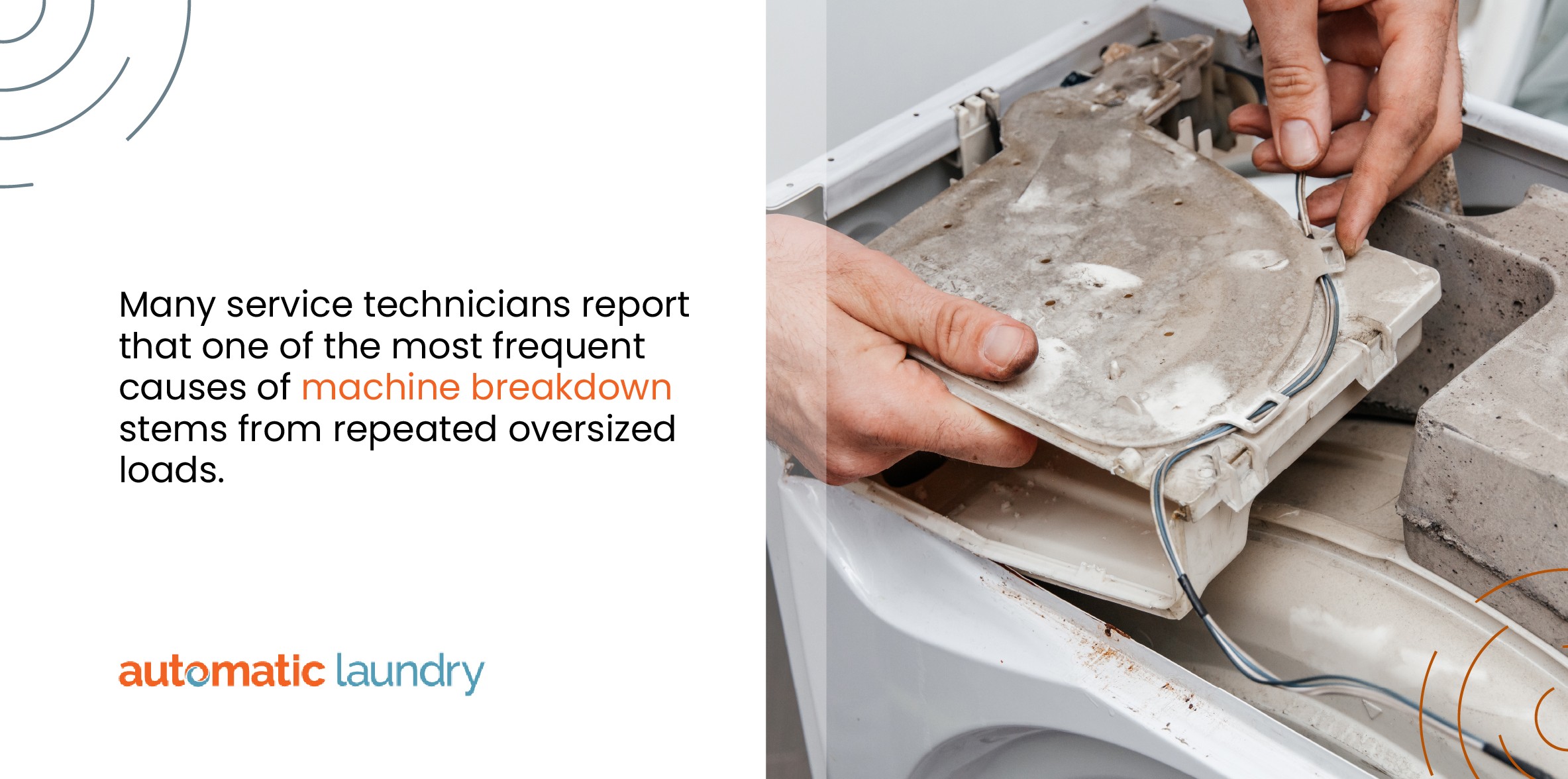
Inside every commercial washer is a rotation system engineered to distribute clothing evenly. When too many garments fill the drum, weight shifts unevenly during spin cycles, causing excessive shaking and friction. That stress works against the machine’s suspension supports and drive components. Even when a cycle appears to run normally, the internal wear accumulates session by session. Many service technicians report that one of the most frequent causes of machine breakdown stems from repeated oversized loads; residents rarely notice damage until it results in an out-of-order sign.
A second problem arises when overloaded washers are forced to work harder to remove dirt and detergent. When clothing cannot circulate properly, water rinses unevenly, leaving soap residue inside both the fabric and the machine. Thick buildup eventually affects sensors and drum balance. Washing machine maintenance teams routinely find clogged drain pumps and worn motor belts caused by heavy loads. According to American Laundry News, reducing the load size by 10-30% for stain treatment provides more mechanical agitation and a higher chemical-to-fabric ratio, improving cleaning effectiveness for heavily soiled items.
2. How Clothing Suffers When Machines Are Overfilled
Residents often overload washers to save time, but the result is usually the opposite. Dense loads prevent items from moving freely, meaning garments rub together aggressively during agitation. Delicate fabrics pill faster, colors dull sooner, and stretch garments lose elasticity. Towels washed in cramped cycles frequently emerge damp, heavy, and under-rinsed. Proper space inside the drum is part of fabric care, not just a convenience factor. That is why many experts recommend only filling washers three-quarters of the way for balanced cleaning.
Even everyday items such as jeans, hoodies, and sheets wear down when layered beyond the recommended capacity. Clothing fibers weaken when friction replaces water circulation. Residents dealing with fading colors or quick fabric wear often benefit simply by downsizing loads. Blogs like this emphasize how a little breathing room leads to a noticeably fresher result. The goal isn’t more loads, it’s better washing machine maintenance that keeps both fabrics and machines in good condition for years.
3. Maintenance Costs Increase for Everyone
One overlooked consequence of overloading is how it affects an entire building rather than just one resident. When washers break, downtime affects schedules, increases wait times, and causes backlogs across shared laundry spaces. Property operators frequently spend unnecessary service funds on damage caused by avoidable user habits. Preventive washing machine maintenance is more cost-effective than frequent repairs, especially for smaller properties working within tight operating budgets.
Service companies track patterns, and overload-related failures are among the most common avoidable issues. Pumps fail, bearings grind, and sensors misread due to detergent buildup, all results of heavy laundry cycles run repeatedly over time. The result is a repair that could have been avoided with load moderation. This is why educational laundry content, like this blog post, encourages residents to understand how their habits directly support equipment sustainability. Better care equals fewer disruptions and lower operational expenses.
4. Practical Washing Machine Maintenance Residents Can Use Today
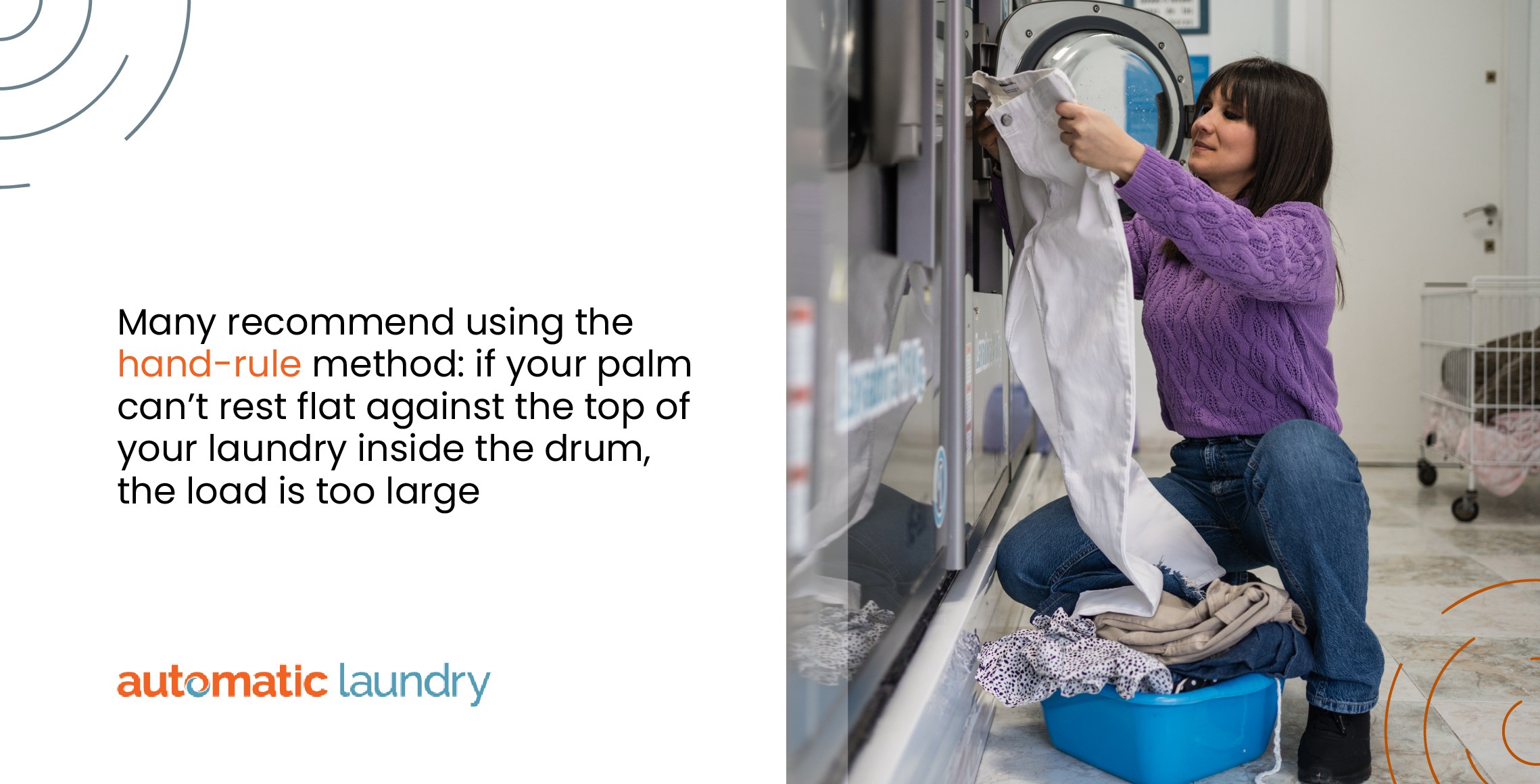
Maintenance isn’t only handled by professionals. Residents contribute daily by running balanced loads, measuring detergent accurately, and clearing lint filters when machines allow resident access. Many recommend using the hand-rule method: if your palm can’t rest flat against the top of your laundry inside the drum, the load is too large. Splitting one heavy load into two medium ones reduces strain, improves cleaning results, and supports long-term washing machine maintenance for the entire building.
In addition, consider washing bedding separately from clothing, and never wrap garments around the agitator inside top-load units. According to Whirlpool, Energy Star-certified washers use about 20 percent less energy and 30 percent less water than regular washers, helping residents clean clothes more efficiently while reducing utility costs. These adjustments are small, but over time they create a stronger resident-run culture of machine care. A little extra attention today ensures reliable access tomorrow.
Conclusion
Overloading a washer may seem harmless, but it is one of the most damaging habits seen in residential laundry spaces. It accelerates machine wear, reduces clothing quality, increases building-wide repair costs, and disrupts laundry availability for everyone sharing the facility. By understanding proper load sizing and practicing consistent washing machine maintenance, residents extend the life of machines and improve their own laundry results. If your property is working to reduce service downtime, maintain equipment reliability, or educate residents on better laundry practices, contact us today. Our services can help guide, support, and improve the laundry experience across your community.
