

Peak seasons bring both opportunity and pressure for hotels. Higher occupancy drives revenue, but it also places significant strain on laundry room equipment. When usage climbs far beyond normal levels, the likelihood of malfunctions, inefficiencies, and unexpected downtime increases quickly.
Hotel leaders know peak demand is inevitable, which makes preparation essential. This post outlines how to safeguard performance, protect your investment, and keep operations running smoothly, even during the busiest periods.
Understand Your Peak Laundry Load Patterns
Every hotel has a rhythm. High-tourism seasons, convention schedules, holidays, and even weekends can cause sharp increases in laundry volume. Start by analyzing historical data—how many rooms are occupied, how many pounds of laundry are processed per day, and how many hours your laundry room operates during peak times. Hotel Management recommends that you invest in predictive support and analytics to flag trends in your laundry room equipment usage.
Compare this data with the rated capacity of your washers and dryers. If your machines are consistently operating at or above 90% capacity for extended periods, it is important to find ways to reduce or distribute this workload. Your laundry room equipment may be at risk of overheating, motor wear, or drum stress. Investing in strong washers and dryers with smart technology can fortify your laundry room in the long run.
This is also a good time to evaluate whether a short-term rental of additional machines, outsourcing part of your laundry, or expanding your on-site capacity could prevent long-term damage.
Use Strategic Machine Rotation to Reduce Wear
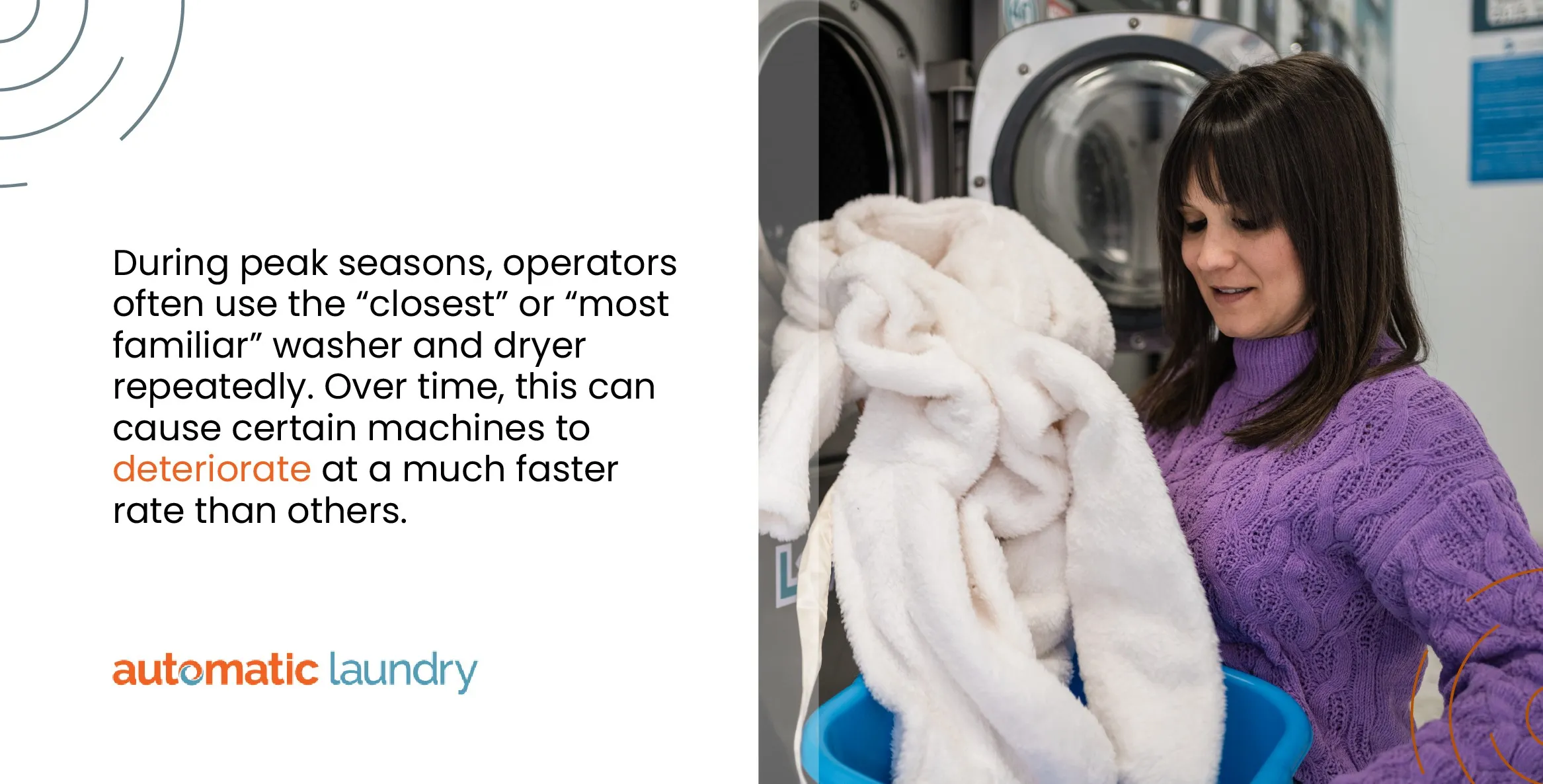
One of the most overlooked practices in hotel laundry management is the rotation of machines. During peak seasons, operators often use the “closest” or “most familiar” washer and dryer repeatedly. Over time, this can cause certain machines to deteriorate at a much faster rate than others.
Instead, create a rotation schedule so all laundry room equipment shares the workload evenly. For example, assign specific machines to be used in the morning shift, while others take the afternoon or evening loads. This balanced use reduces stress on motors, bearings, belts, and heating elements. Hotel & Resort Keycards insists that you implement a schedule to prevent friction with guests.
Machine rotation also helps identify performance inconsistencies more quickly. If one dryer consistently takes longer to dry or one washer vibrates more than the others, your team can report it for service before it fails. In the long run, we recommend implementing these schedules to improve your overall guest experience and efficiency.
Implement Preventive Maintenance And Scheduling Before and During Peak Season
Preventive maintenance is the foundation of long-lasting laundry room equipment. Before your busiest season begins, schedule a full inspection of all washers, dryers, and finishing equipment. This should include:
- Checking belts, hoses, and seals for cracks or wear
- Cleaning lint traps, vents, and ductwork
- Inspecting electrical connections and control panels
- Ensuring proper calibration of water and temperature settings
During peak season, increase the frequency of light maintenance tasks. Daily lint removal and weekly vent inspections can dramatically reduce the risk of overheating. Partnering with a professional laundry service provider gives you access to trained technicians who can identify issues before they disrupt operations. Stocking laundry products that mesh well with your machines, such as lightly astringent or anti-buildup detergent, is also a forward-thinking move.
Adjust Scheduling & Monitor Performance Data
Peak laundry seasons don’t always require more machines—sometimes they simply require better scheduling. Rather than trying to process all laundry during one part of the day, consider using staggered shifts.
Early-morning and late-evening cycles can balance the workload across the full operating day. If your property allows, running select machines overnight can significantly reduce the daytime strain on your laundry room equipment.
This approach also gives staff more flexibility and helps avoid “rush hours” where several machines are running at full capacity simultaneously.
Modern laundry room equipment often comes equipped with smart technology that allows you to monitor usage, efficiency, and potential performance issues. These systems track water consumption, cycle counts, energy usage, and error patterns. Using a program like LaundryConnect™ that tracks data about your machines in real-time will help you save effort and headache.
With real-time data, hotel managers can quickly spot trends such as excessive run times or unusual temperature fluctuations. This insight allows faster intervention and reduces the likelihood of sudden equipment failure.
Conclusion: Extend the Life of Your Laundry Room Equipment
Managing peak laundry seasons in hotels doesn’t have to mean pushing your machines toward failure. By understanding your usage patterns, rotating machines, practicing preventative maintenance, training staff properly, and partnering with a trusted service provider, you can protect your laundry room equipment and maintain operational efficiency all year long.
If you’re ready to strengthen your laundry operations, reduce downtime, and extend the lifespan of your machines, contact Automatic Laundry today.
