
Managing fur-heavy laundry loads can be tough on your laundry room equipment, whether you’re running a busy grooming salon or handling your pets’ blankets at home. Pet hair doesn’t just cling to fabrics. It finds its way into washers, drains, and dryer vents, where it can cause clogs and slow your machines down. Over time, that buildup leads to poor performance, lingering odors, and even costly repairs if left unchecked.
But avoiding damage doesn’t mean avoiding furry laundry altogether. With the right preparation, maintenance, and cleaning habits, you can keep your laundry room equipment running smoothly while still handling those fur-laden towels, uniforms, and bedding with confidence. This guide will show you simple, effective strategies to prevent lint overload, protect your machines, and save time on cleanup, so every wash comes out clean without compromising the health of your laundry system.
Why pet hair is tough on laundry room equipment
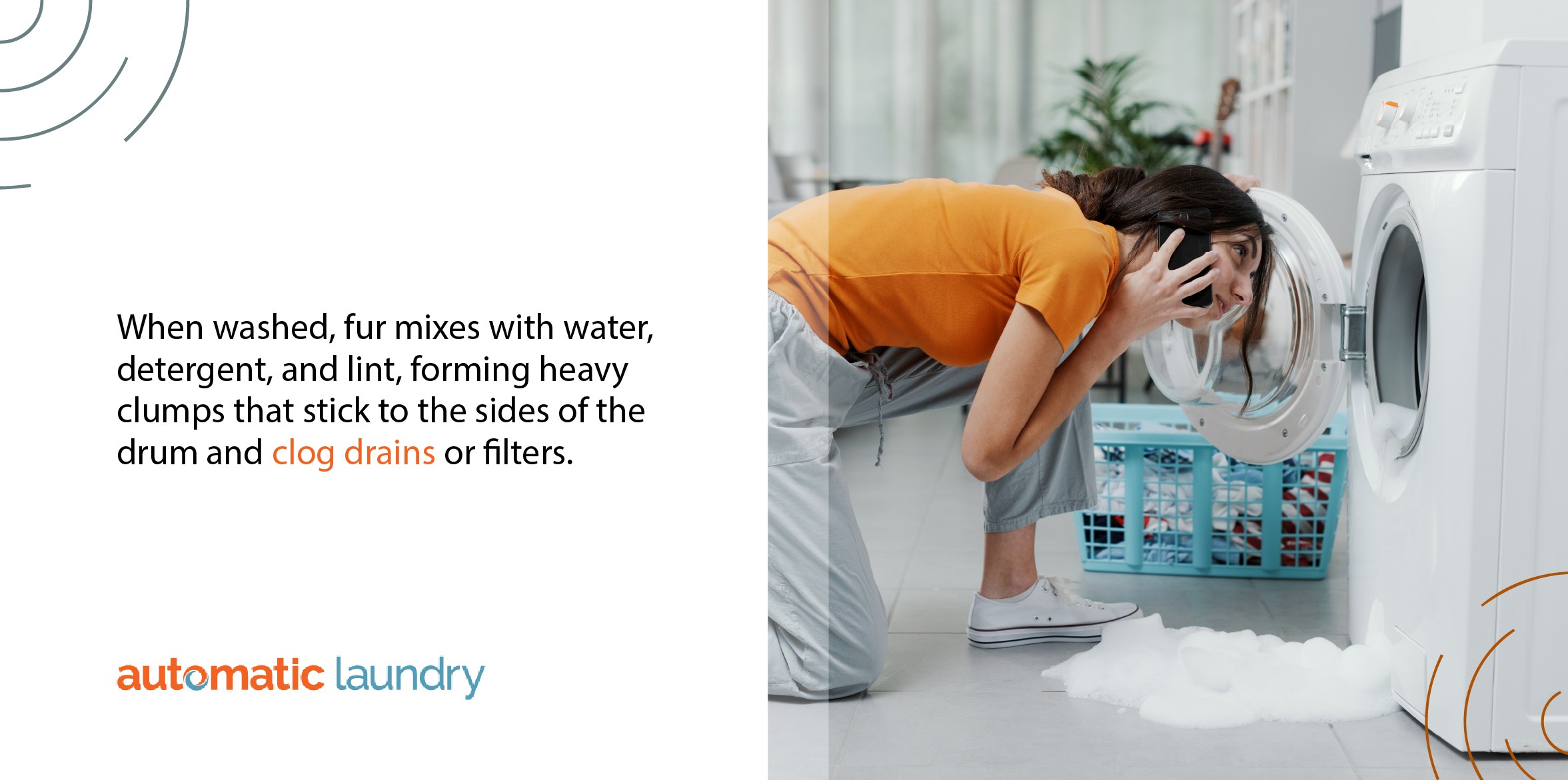
Pet hair can be one of the biggest challenges for laundry room equipment. When washed, fur mixes with water, detergent, and lint, forming heavy clumps that stick to the sides of the drum and clog drains or filters. Once hair reaches the pump or hose system, it can block water flow and strain the machine’s motor.
In dryers, loose fur collects around vents, where heat and moisture cause it to compact into dense layers. The buildup limits airflow, reduces drying efficiency, and may shorten the life of the equipment. Over time, even small amounts of leftover fur create a cycle of reduced performance and lingering odors. Recognizing signs such as slow drainage, uneven spinning, or overheating is the first step toward protecting your machines from damage and unnecessary wear.
Pre-wash prep: reducing fur before the machine
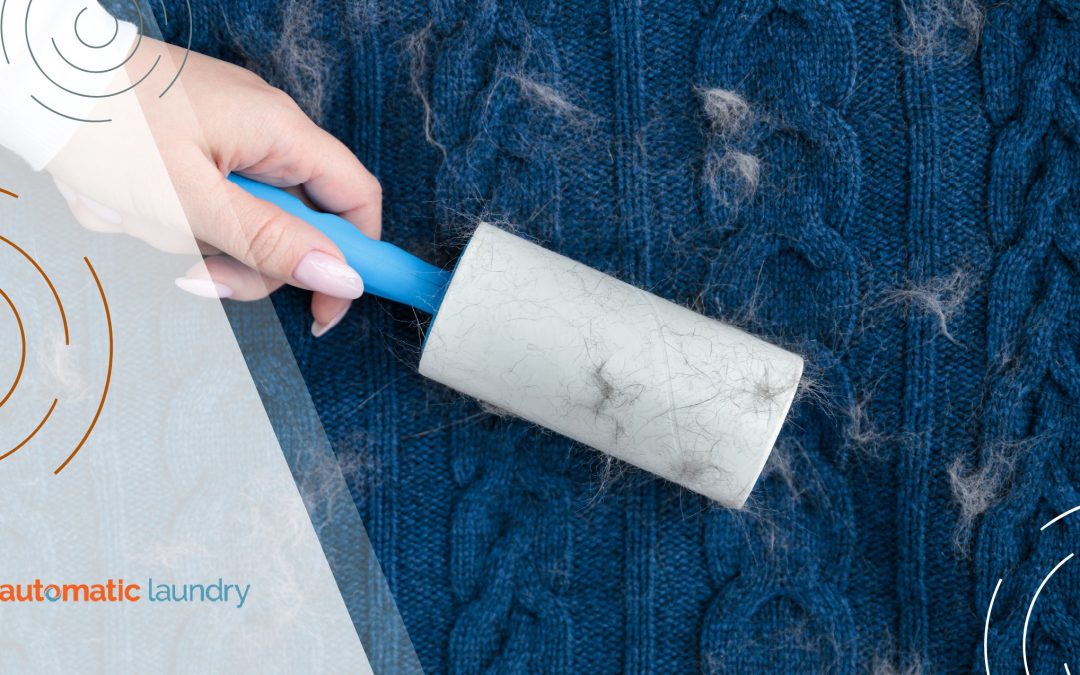
A quick pre-wash routine makes a major difference in how much hair enters the machine. Start by shaking out towels, bedding, and uniforms outdoors to release loose fur. For heavily coated fabrics, use a lint roller or vacuum attachment to lift embedded hair from the surface. Rubber grooming tools or dampened rubber gloves can also pull stubborn strands that cling deeply to fibers.
Once loose hair is removed, separating heavily furred items from regular laundry prevents transfer between loads. A few extra minutes of preparation help fabrics come out cleaner, reduce drain blockages, and extend the lifespan of your washing equipment.
Smart washing techniques
Once fur-heavy items are properly prepared, setting up the right wash routine keeps everything running efficiently. Choose a cycle with extra water or a rinse option to help flush out stray hairs. Cooler water can reduce static that makes fur cling to fabric, while a gentle cycle prevents excess lint production. Add a small amount of white vinegar to the rinse to loosen trapped hair and freshen fabrics.
Mesh laundry bags work well for concentrated loads of grooming towels or pet bedding since they trap debris that might otherwise reach internal filters. After each use, clean the washer drum and filter to remove leftover fuzz before it hardens or sticks. These small adjustments keep fabrics soft, odors at bay, and your washing machines performing at their best through repeated fur-heavy loads.
Protecting dryers and other laundry room equipment
After washing fur-covered fabrics, the drying process brings its own challenges. Hair that escapes the washer can gather in lint traps, vents, and exhaust lines, where heat and airflow cause it to cling tightly to surfaces. Cleaning the lint screen before and after each load helps prevent blockages.
For a more thorough clean, use a soft brush or vacuum attachment to remove buildup from around the lint housing. Wool dryer balls can reduce static and help release trapped hair during tumbling, leaving fabrics softer and fresher.
It’s also wise to inspect ductwork and vent openings each month for hidden clogs that may restrict airflow. Consistent maintenance keeps dryers performing efficiently and protects other laundry room equipment from the strain caused during extended dry cycles or restricted ventilation.
Maintaining commercial laundry room equipment
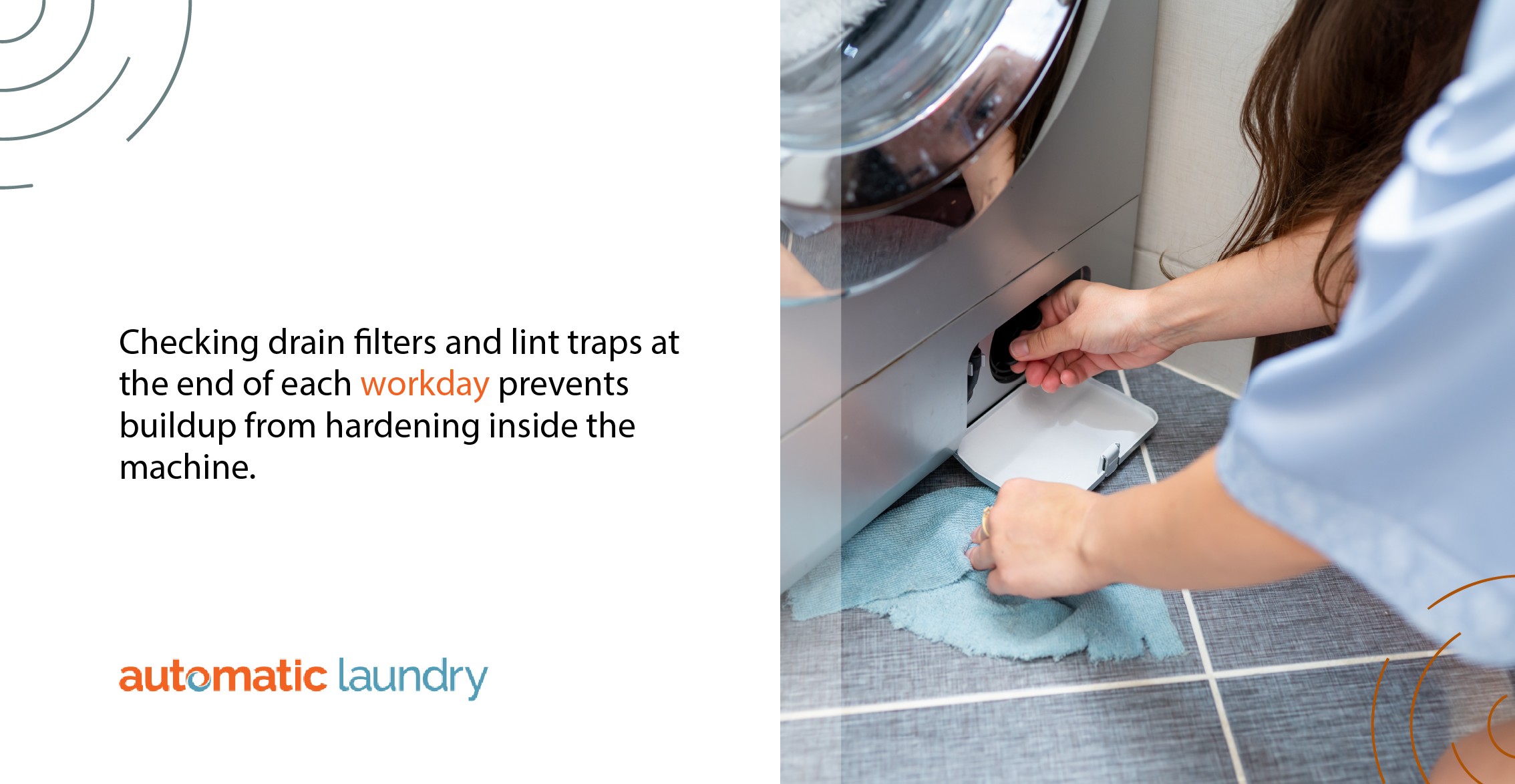
In professional grooming salons and veterinary clinics, laundry loads often include thick layers of fur and heavy fabrics, making regular maintenance essential for dependable operation. Checking drain filters and lint traps at the end of each workday prevents buildup from hardening inside the machine. Weekly inspections of hoses, door seals, and drum edges help spot early signs of wear that could cause leaks or mechanical issues.
For larger systems, schedule monthly deep cleans to flush soap residue, hair, and debris from internal components. Using high-quality filters and trap accessories designed for commercial laundry room equipment improves efficiency and reduces service calls.
Posting a clear cleaning checklist near the machines also keeps teams consistent and accountable. A few simple habits support better performance, reduce downtime, and keep your facility’s laundry process running reliably from one busy day to the next.
Long-term practices for efficiency
Consistent routines make the biggest difference in keeping laundry operations running smoothly. Create a daily checklist that includes shaking out fabrics, cleaning filters, and wiping down equipment surfaces after use. A weekly deep clean, along with regular inspections, helps prevent fur and lint from building up unseen in hoses and drains.
Training staff or family members to follow the same steps builds steady habits that protect machines from unnecessary strain. Investing in reusable lint traps, mesh bags, or secondary filters adds an extra layer of protection for high-volume washing.
Over time, these simple efforts save money on repairs, reduce machine downtime, and keep every load coming out cleaner with much less stress placed on your washing and drying systems.
Keeping your equipment fur-free and reliable
Managing fur-heavy laundry doesn’t have to be stressful. With steady habits and the right care, it’s easy to prevent clogs, cut down on buildup, and keep machines performing like new. Regular cleaning, filter checks, and pre-wash preparation protect your laundry room equipment and lead to faster, cleaner results every time. Consistency keeps systems efficient and extends their lifespan, saving time and money across every wash.
For business owners and pet care professionals ready to simplify maintenance even further, Automatic Laundry offers reliable equipment solutions, expert servicing, and support designed to handle fur-heavy workloads with ease.
