

Drying activewear and delicate clothing in shared laundry facilities can be challenging, especially when you want to keep your garments looking and feeling their best. Many residents in apartment buildings rely on communal washers and dryers, which often have limited settings and higher heat levels than home machines. This can cause unnecessary wear and tear, reducing elasticity in performance fabrics and weakening the fibers in delicate materials.
Proper drying methods play a big role in extending the lifespan of your clothing. Activewear fabrics such as spandex, nylon, and polyester blends are designed for stretch, breathability, and moisture control, but repeated exposure to high heat can damage those qualities. Delicates such as silk, lace, or fine knits need gentler handling to prevent shrinking, stretching, or distortion.
In shared laundry spaces, taking the extra step to choose the right drying technique helps maintain fabric strength and garment shape. Adjusting your approach helps you preserve the performance features of your activewear and the beauty of your delicate pieces. Here’s how.
Understanding fabric needs
Understanding how different fabrics respond to heat and movement is essential for drying activewear and delicates properly. Activewear materials such as spandex, Lycra®, and polyester blends are designed to stretch and manage moisture, keeping you comfortable during workouts. These fabrics, however, are highly sensitive to heat. Excessive warmth from dryers can cause them to lose elasticity, leading to sagging and a shorter lifespan. Repeated exposure to high temperatures also weakens fibers, making the fabric less breathable and more prone to wear.
Delicate fabrics like silk, chiffon, and lace require an entirely different approach. These materials often rely on fine, natural fibers that can shrink, lose shape, or fray easily when treated roughly. Friction and over-drying can make them brittle or dull. Shared laundry dryers tend to operate at higher heat levels and can have stronger tumbling action than home dryers. Those conditions increase the risk of damage to activewear and delicate garments. Choosing gentle drying methods helps maintain flexibility, softness, and color over time, even in shared laundry environments.

Tips for drying activewear in shared laundry rooms
Drying activewear properly helps preserve the performance and comfort of your favorite workout pieces. Most activewear is designed from synthetic materials like polyester, spandex, or nylon, which are made to stretch and wick away moisture. These fabrics can lose their strength and flexibility when exposed to high heat. Choosing a low heat or air-dry setting in shared laundry rooms keeps fibers intact and helps maintain fit and shape.
Some items, such as yoga pants or sports bras, benefit from being laid flat to dry. This prevents unnecessary pulling that can cause stretching or distortion over time. Hang drying is another good option, especially for lighter garments, although it can be tricky to find space in a shared laundry area. Portable or foldable drying racks can make this process easier while keeping clothes wrinkle-free.
Fabric softeners should be avoided when drying activewear because they coat fibers and reduce their moisture-wicking ability. Simple practices like these help extend the life of your activewear, keeping it comfortable and looking new after every wash.
Caring for delicates
Caring for delicate garments requires patience and the right drying methods to keep fabrics soft, smooth, and intact. While drying activewear focuses on maintaining stretch, delicates need protection from heat and rough motion. Fabrics like lace, knits, and loosely woven materials respond best to lay flat drying because it supports their shape and structure. Before laying items flat, gently pat any extra moisture out with a clean towel to help shorten drying time.
Mesh drying racks are excellent for this process since they allow air to circulate around the fabric evenly. Portable hangers also work well for lightweight pieces that can handle hanging without stretching. A low heat setting with a short cycle is safest for items that can tolerate a dryer. Taking small steps like these helps delicate clothing retain its texture and fit after every wash.
Shared laundry facility considerations
Shared laundry facilities present unique challenges for drying activewear and delicates, especially when space is limited. Air drying or laying items flat can require more room than what is available in communal settings, so planning is important. Choosing a time when the laundry room is less busy allows more freedom to set up drying racks or use available flat surfaces without getting in the way of neighbors.
Respecting community drying areas is essential for maintaining a good relationship with other residents. Always move items promptly once they are dry and keep racks or lines tidy to avoid cluttering shared spaces. Portable solutions such as foldable drying racks or a towel rolling method can help dry activewear and delicate clothing without needing large permanent setups.
Drying activewear in these environments often means being creative with placement, such as using shower rods or balcony railings if building rules allow. Adapting to the shared setting while caring for fabrics will help make laundry day smoother and more efficient for everyone in the building.
Common mistakes to avoid
When drying activewear and delicate fabrics, small mistakes can cause lasting damage to your garments. One of the most common errors is using high-heat tumble drying on stretchy or fragile materials. Excessive heat can weaken fibers, reduce elasticity, and shorten the lifespan of clothing. Choosing lower heat settings or air drying prevents this kind of wear and keeps fabrics performing as intended.
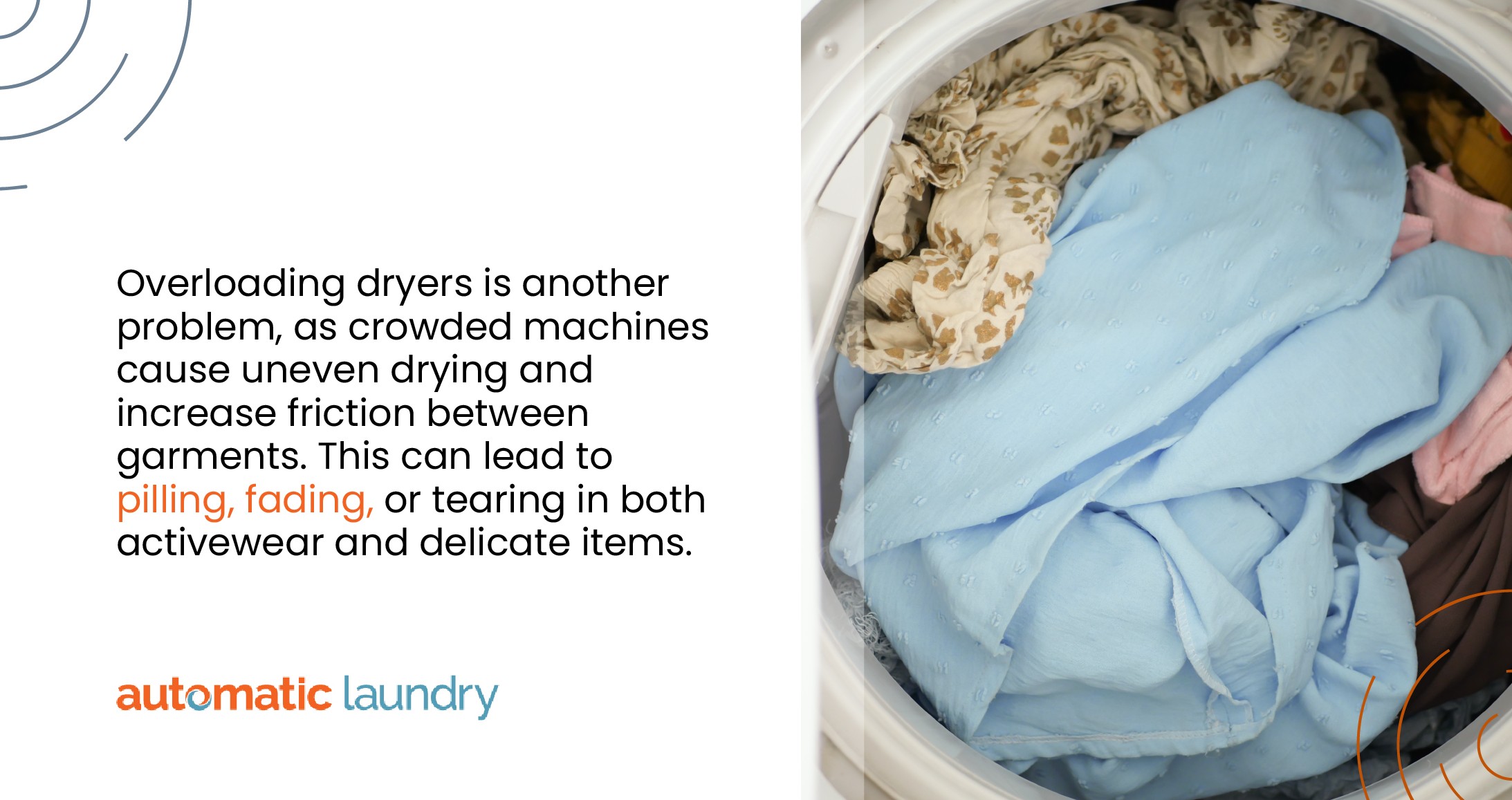
Overloading dryers is another problem, as crowded machines cause uneven drying and increase friction between garments. This can lead to pilling, fading, or tearing in both activewear and delicate items. Always check care labels before drying, since they offer the best guidance for each fabric type. Dryer sheets should also be avoided when drying activewear because they coat fibers and block moisture-wicking capabilities. Paying attention to these details keeps clothes looking newer and performing well for longer.
Alternative drying methods for small spaces
Drying activewear and delicate garments can be tricky when living in a small apartment, but several simple techniques can help protect fabrics while saving space. Finding creative ways to air dry ensures your clothing retains its shape and strength, even without access to large drying areas.
These strategies are effective for drying activewear and delicates while keeping small spaces tidy:
- Balcony or bathroom hang drying. These areas provide good airflow and privacy. Hanging activewear or lightweight items on sturdy hangers helps them dry evenly without stretching.
- Towel roll method. Place a clean towel on a flat surface, lay your clothing on top, then roll the towel to press out extra moisture before air drying gently.
- Wall-mounted or collapsible racks. These racks are compact and easy to store, offering room for multiple garments at once.
- Overnight air drying on shower rods. Hanging items in the bathroom allows for slow, steady drying while saving floor space.
Laundry tips for lasting wear
Protect your clothing and simplify your laundry routine with Automatic Laundry’s convenient, smart laundry solutions for multi-family communities. Discover how our modern equipment, secure mobile payments, and reliable maintenance make laundry day easier and more efficient for every resident. Visit Automatic Laundry to learn how you can enjoy a better laundry experience where care and convenience come together.
