


Washing whites with colors is something many residents want to do to save time without damaging their clothing. Sorting every load can feel like an extra step, especially in shared laundry spaces or busy households. The good news is that modern washing habits make mixed loads much more manageable than they used to be.
Small changes in water temperature, detergent selection, and load size can go a long way in protecting fabrics. Residents don’t have to choose between convenience and proper clothing care. With a few simple adjustments, it becomes easier to keep garments looking clean and bright without separating everything.
This guide covers practical ways to reduce color bleeding and protect your laundry, even when mixing lighter and darker items. These tips fit easily into everyday routines and help simplify laundry day.
Is washing whites with colors safe?
Mixing laundry doesn’t always lead to color bleeding, even though it’s a common concern. Many households handle washing whites with colors successfully when they follow a few basic guidelines. Clothes that have already been washed several times are less likely to release dye, which makes them safer for mixed loads. Issues tend to come from newer or heavily dyed items, especially bold colors.
Fabric type also plays a role. Some materials hold dye more effectively than others. Checking care labels can help reduce risk before combining items. While no method removes risk completely, thoughtful washing habits make it realistic to manage mixed loads without strict sorting. This approach works well for residents who want to save time.

Use cold water to prevent color bleeding
Water temperature directly impacts dye transfer during a wash cycle. Hot water can loosen dyes from fabric, increasing the chance they spread to other items. Cold water helps dyes stay in place and limits how much color moves through the load. This makes washing whites with colors a more reliable option while protecting lighter fabrics.
Cold water also helps maintain fabric quality over time. Many modern detergents are designed to perform well at lower temperatures, so cleaning power isn’t lost. Residents using shared machines can rely on this setting across different load types. Lower energy use is an added benefit, making cold water a practical option for routine laundry.
Wash new clothes separately first
New garments are one of the most common causes of color bleeding. Excess dye often releases during the first few wash cycles, which can affect other items in the same load. Running a separate wash for new pieces helps remove that extra dye early.
After a couple of washes, many items become safer to mix in. This step supports washing whites with colors later without added concern. Deep or bright shades like red or dark blue may need extra attention. Taking this precaution at the start can prevent larger issues later and protect the rest of your clothing.
Don’t overload the washer
Overfilling the washer increases friction between clothes, which can lead to more dye transfer. Garments need enough space to move freely so water and detergent can circulate. When space is limited, fabrics rub together more and trap loose dye.
Keeping loads at a moderate size improves cleaning and reduces the chance of color bleeding. This is especially helpful in shared laundry rooms where machine capacity may vary. Leaving room in the drum makes washing whites with colors more effective and predictable. A loosely filled washer is a simple but important habit.
Use color-catcher sheets or similar products
Color catcher sheets help absorb loose dyes in the wash water before they attach to other fabrics. These products are a convenient option for residents who want to simplify laundry routines. They can support washing whites with colors with less risk.
They’re not perfect, but they can reduce visible staining when used correctly. Adding one sheet to a load is quick and easy. For best results, combine them with cold water and proper load sizing. This creates a more reliable approach to mixed laundry.
Choose the right detergent
The type of detergent used can influence how dyes behave in the wash. Formulas made for color care help keep dyes suspended in water, so they don’t settle on other garments. This makes washing whites with colors easier while maintaining the fabric’s appearance.
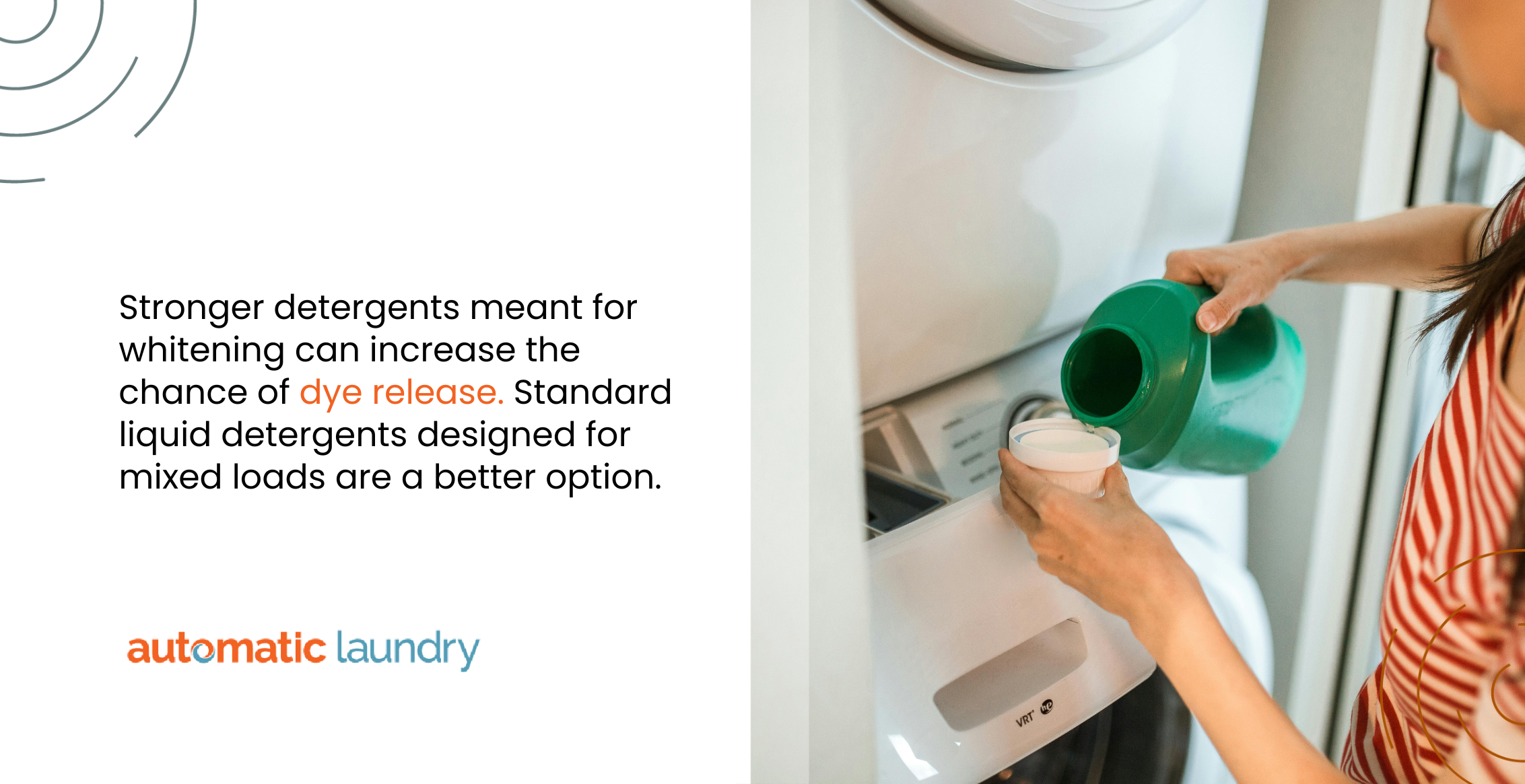
Stronger detergents meant for whitening can increase the chance of dye release. Standard liquid detergents designed for mixed loads are a better option. Using the correct amount is also important. Too much can leave residue, while too little may reduce cleaning performance. A balanced approach supports better overall results.
Turn clothes inside out
Turning clothes inside out before washing helps reduce friction on visible surfaces. This limits how much dye transfer shows on the outside of garments. Dark items benefit most from this step, as it helps maintain their original look.
This small habit supports safer mixed loads and makes washing whites with colors more successful over time.
Avoid high heat in washing and drying
High temperatures can cause transferred dyes to set into fabric, making stains harder to remove. Lower heat settings reduce this risk and help protect clothing. This applies during the wash cycle and in the dryer.
Choosing a low or medium drying setting offers a gentler approach. It also supports washing whites with colors without locking in any minor dye transfer. Air drying can be helpful for more delicate items. Managing heat is an easy way to extend the life of clothing.
What to do if colors bleed
Color bleeding can still happen, even with careful washing habits. Acting quickly can prevent the problem from becoming permanent. Rewash the affected items right away and avoid putting them in the dryer first. Heat can set the stain.
An oxygen-based cleaner may help remove unwanted color if the fabric allows it. Always check care labels before using any treatment. Quick action improves the chances of restoring the garment. This step completes a routine that keeps mixed laundry simple and manageable.
Make laundry day easier and more efficient
Washing whites with colors can simplify your routine without sacrificing results when you follow a few smart habits. Small adjustments like using cold water, avoiding overloaded machines, and choosing the right detergent can make a noticeable difference in how your clothes look and last. These steps help reduce the need for constant sorting while still protecting your favorite items.
For residents using shared laundry spaces, convenience matters just as much as performance. Reliable equipment and well-maintained machines play a key role in getting consistent results with every load. Automatic Laundry provides modern, efficient laundry solutions designed to make laundry routines easier for residents. From advanced machines to user-friendly setups, the right laundry environment supports better outcomes with less effort.
