
Firefighters face dangerous exposures long after the flames are out. Toxic residues from smoke, soot, and hazardous materials cling to turnout gear and can easily spread to station wear, vehicles, and living quarters if not properly managed. For fire station managers and decision-makers, preventing cross-contamination isn’t just a best practice, it’s a responsibility tied directly to long-term health, compliance, and operational safety. This blog post outlines practical, facility-level strategies for separating, handling, and laundering firefighter gear using a smart washer and dryer system.
Establish Physical and Procedural Separation Between Gear and Station Wear
One of the most effective ways to prevent cross-contamination starts with clear separation, both physical and procedural, between contaminated turnout gear and clean station wear. To minimize the spread of harmful contaminants and support safer daily operations, clear physical separation within the station is essential. Fire stations should establish distinct zones for:
- Dirty gear intake and storage: This area should be clearly designated and isolated to contain contaminants until proper laundering can occur.
- Laundering and decontamination: All cleaning should take place using approved procedures and equipment designed to safely remove hazardous residues.
- Clean gear and station wear storage: This space should remain contamination-free and reserved only for fully cleaned and dried apparel.
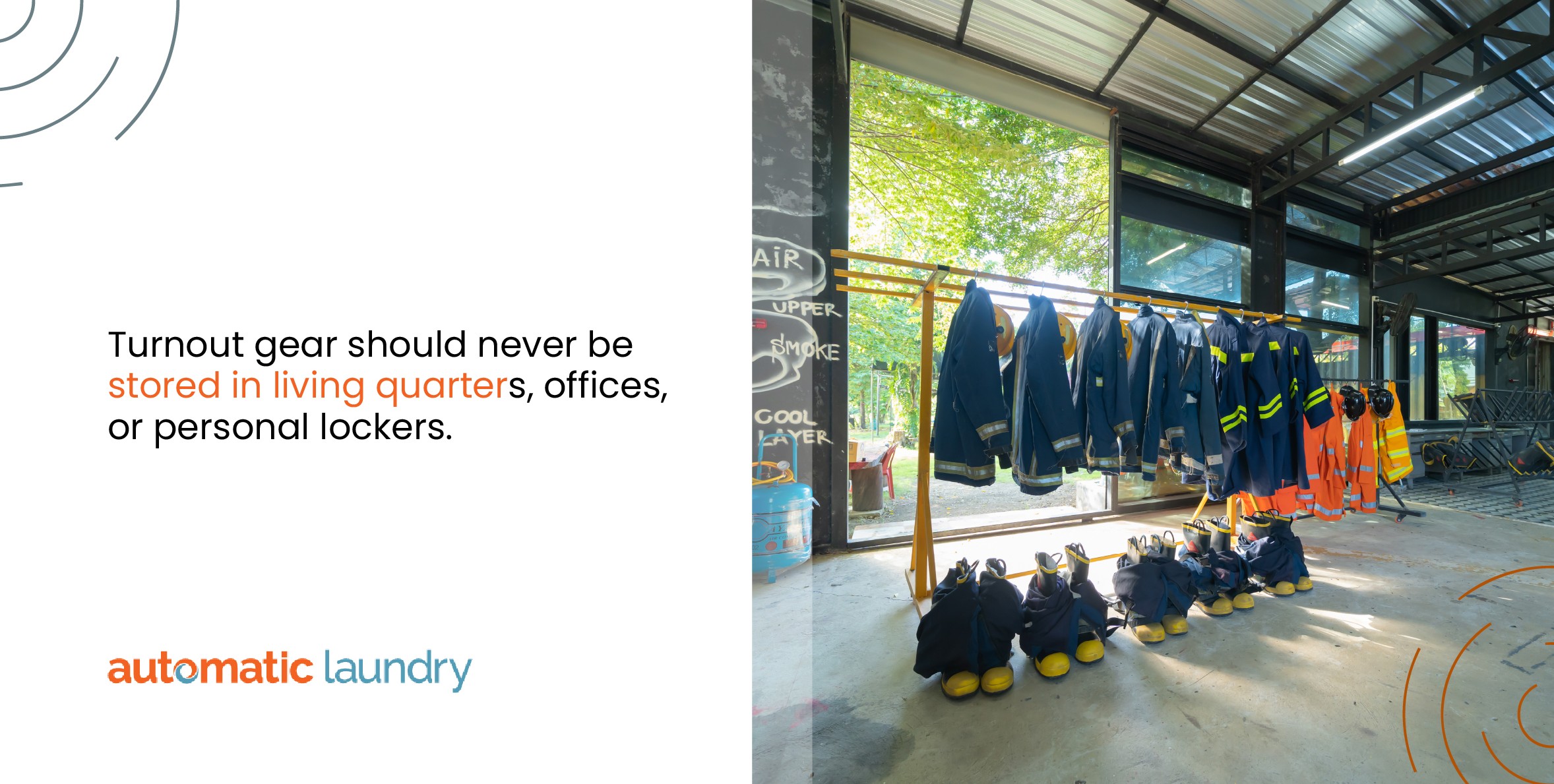
Turnout gear should never be stored in living quarters, offices, or personal lockers. Even brief exposure can transfer carcinogenic particles to furniture, uniforms, and skin. NFPA 1851 emphasizes that contaminated gear should be isolated immediately after use to minimize secondary exposure. Off-gassing from soiled gear can continue for hours after an incident, increasing the risk of inhalation in enclosed spaces. This practice protects not only firefighters but also administrative staff, visitors, and family members who may come into contact with contaminated areas. Consistent isolation procedures also help departments demonstrate compliance with recognized safety standards and reduce long-term liability. We have more tips and services available for fire stations on our website.
Proper Washing Practices and the Role of a Smart Washer and Dryer
Laundering firefighter gear isn’t the same as washing everyday clothing. NFPA education stipulates that incorrect methods can both damage gear and fail to remove harmful residues. Turnout gear should never be washed in the same machines as station wear or personal clothing. Doing so risks transferring contaminants into fabrics worn daily, increasing chronic exposure.
A smart washer and dryer designed for fire service applications helps solve this problem by offering:
- Remote monitoring and real-time visibility through LaundryConnect™: LaundryConnect™ allows station managers to remotely view real-time machine status and availability, helping ensure turnout gear and station wear are washed promptly and according to protocol.
- Service alerts and system notifications for consistent performance: Built-in Service Alert functionality notifies management of equipment issues before they disrupt operations, reducing downtime and ensuring contaminated gear is not left waiting or improperly handled.
- Advanced sensing and load-balancing technology: Speed Queen® front load washers use revolutionary suspension and sensing technology to automatically manage and redistribute out-of-balance loads, delivering uninterrupted cycles even with heavy, bulky turnout gear.
Unlike residential or light commercial machines, smart systems are built to handle heavy, contaminated loads without re-depositing toxins into the drum or drainage system.
Policy, Training, and Long-Term Risk Reduction
Even the best equipment can’t compensate for weak policies or inconsistent training, as outlined by Howell Rescue. Reducing cross-contamination requires a culture of accountability supported by leadership. Documented laundering and gear-handling policies should align with NFPA standards and local regulations. These policies should clearly define:
- Who is responsible for laundering gear
Departments should clearly assign responsibility to specific roles or shifts to ensure gear is cleaned consistently and without delay. This accountability reduces confusion and prevents contaminated gear from being overlooked or improperly handled. Clearly defined responsibility also supports compliance tracking and reinforces adherence to departmental safety policies.
- How often gear must be cleaned
Policies should specify cleaning frequency based on exposure level, call type, and visible contamination. At a minimum, turnout gear should be cleaned after any fire event or significant exposure to smoke or hazardous materials. Establishing clear timelines helps reduce cumulative exposure and supports firefighter health over the long term.
- What equipment is approved for use
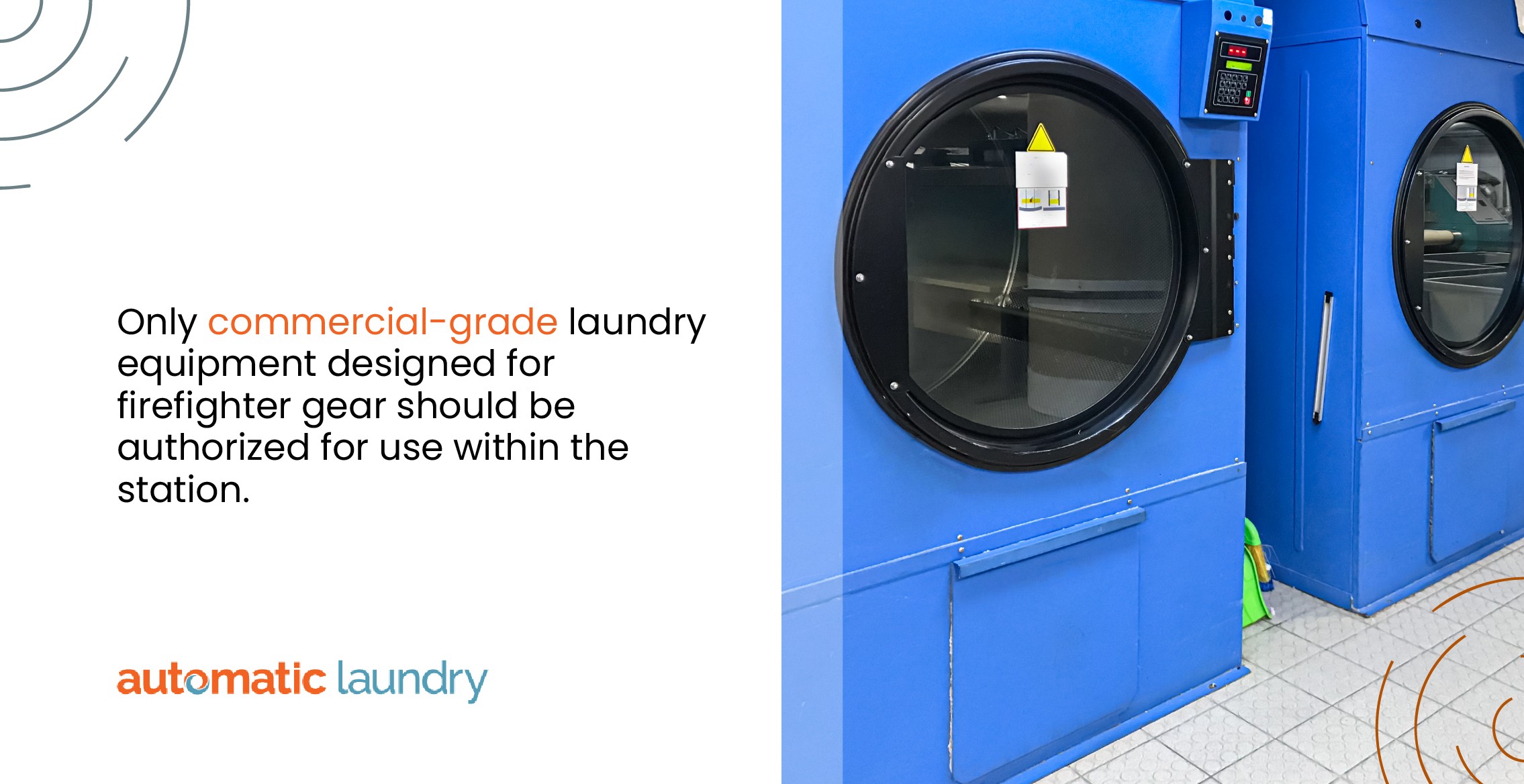
Only commercial-grade laundry equipment designed for firefighter gear should be authorized for use within the station. Approved equipment should meet manufacturer recommendations and align with applicable NFPA standards. Limiting gear washing to designated machines helps prevent cross-contamination and protects both personnel and equipment integrity.
Using a smart washer and dryer system with built-in reporting can support audits, grant applications, and insurance documentation by demonstrating compliance. Firefighters are more likely to follow procedures when they understand that these steps protect not just themselves, but their families and coworkers as well.
Conclusion
Preventing cross-contamination between turnout gear and station wear requires intentional design, clear policies, and the right equipment. By separating gear zones, enforcing proper washing procedures, and investing in a smart washer and dryer, fire station managers can significantly reduce harmful residue exposure while improving compliance and efficiency.
Automatic Laundry specializes in commercial laundry solutions built for the unique demands of fire stations. If you’re evaluating upgrades, designing a new facility, or looking to improve safety protocols, contact Automatic Laundry today to learn how smart laundry systems can support your team’s health and your station’s long-term success.
