



Laundry room design shapes how residents experience shared spaces, especially when noise becomes a frequent source of frustration. In many residential buildings, loud washers and dryers can disrupt daily routines, interfere with rest, and lead to ongoing complaints. Property managers often feel the pressure to resolve these concerns quickly. Yet, noise issues are often tied to deeper design and equipment choices rather than quick fixes.
A well-planned laundry space reduces sound transfer, limits vibration, and improves overall comfort for residents. When noise is addressed early through thoughtful planning, it supports long-term satisfaction and reduces maintenance headaches. Modern apartment laundry solutions now offer quieter equipment and smarter layouts that align with resident expectations for convenience and comfort.
Using practical strategies – layout decisions, equipment upgrades, and maintenance practices – helps reduce laundry room noise. Property managers who invest in better laundry room design can create quieter environments while also improving efficiency and property value.
Why noise control matters in laundry room design
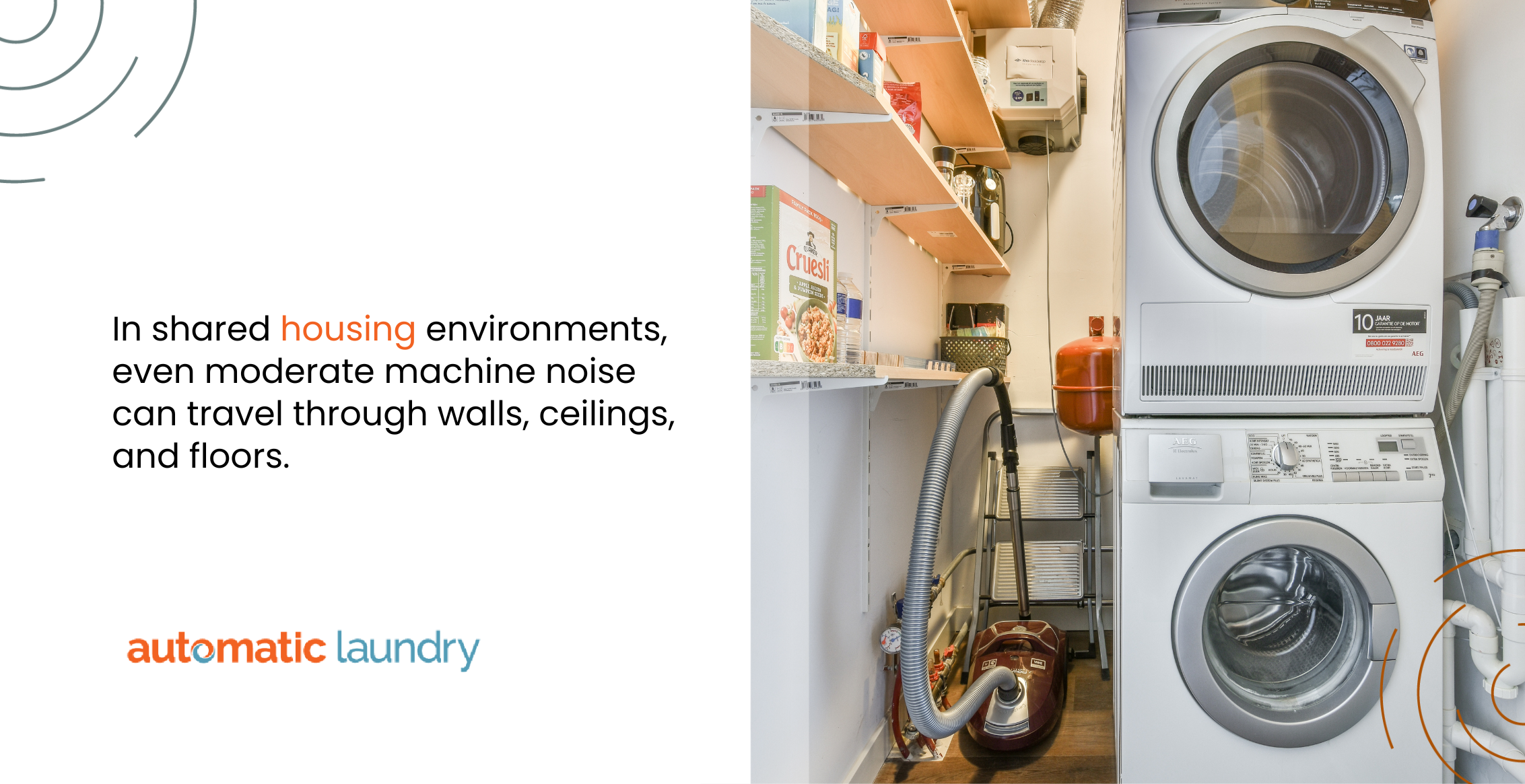
Noise issues often build gradually. Residents may tolerate them for a time before filing complaints. In shared housing environments, even moderate machine noise can travel through walls, ceilings, and floors. This creates disturbances that affect sleep, work-from-home routines, and general comfort. Over time, these disruptions can impact resident retention and increase turnover.
A thoughtful approach to laundry room design helps limit these challenges before they escalate. Sound levels are influenced by equipment, room placement, and construction materials. When laundry areas sit near living spaces, noise transfer becomes more noticeable and harder to manage.
Property managers who address noise concerns early can reduce service requests and improve resident satisfaction. Quiet laundry equipment and proper sound control strategies support a more peaceful environment. These improvements also position the property as more appealing to prospective tenants who value comfort and convenience in shared amenities.
Laundry room design strategies that reduce noise
Effective noise reduction begins with layout and construction decisions that support better sound control. Placement of the laundry room within the building makes a significant difference. Locating these spaces away from bedrooms and common quiet areas helps limit disruption.
Material choices also play an important role. Acoustic panels, rubber flooring, and insulated walls help absorb sound and reduce vibration. Hard surfaces tend to reflect noise, which increases overall sound levels within the room and beyond. Adding soft or sound-dampening materials can significantly improve conditions.
Equipment spacing and room layout also influence how sound travels. Machines placed too close together may amplify vibration, while proper spacing allows for better airflow and reduced noise buildup. Sealing gaps around doors and walls helps prevent sound leakage. These laundry room design strategies create a quieter environment without requiring major structural changes.
Choosing equipment that supports quiet operation
Equipment selection directly impacts noise levels in shared laundry spaces. Modern commercial laundry machines are designed with advanced features that reduce vibration and sound during operation. Property managers should prioritize quiet laundry equipment when upgrading or replacing existing machines.
Front-load washers often produce less noise compared to older top-load models due to improved balance and spin control. Many newer machines include suspension systems that limit movement and reduce vibration transfer to surrounding surfaces. These features help maintain quieter operation even during high-speed cycles.
Professional installation also plays a key role in minimizing noise. Machines that are not level or properly secured can create excessive vibration and sound. Working with experienced providers who specialize in apartment laundry solutions helps avoid these issues. Investing in updated equipment can lead to noticeable improvements in resident comfort and fewer complaints.
Maintenance practices that help reduce laundry noise
Ongoing maintenance is essential for keeping laundry rooms operating quietly over time. Even the best equipment can become noisy if it is not properly maintained. Worn components such as belts, bearings, and motors often lead to increased sound levels and vibration.
Routine inspections help identify issues before they worsen. Technicians can check for loose parts, misalignment, and signs of wear that contribute to noise. Keeping machines level is another important factor, as uneven equipment can create excessive movement during operation.
Cleaning and servicing machines on a regular schedule supports consistent performance. Partnering with a professional laundry service provider can simplify this process and reduce the burden on property management teams. Preventative maintenance reduces noise, extends equipment lifespan, and improves reliability for residents.

Upgrading existing spaces with a better laundry room design
Older laundry rooms often present unique challenges, especially when noise control was not considered during original construction. Retrofitting these spaces can still deliver meaningful improvements without requiring a full renovation. Small changes can make a noticeable difference in sound levels.
Adding vibration pads under machines helps absorb movement and reduce noise transfer through the floor. Installing door seals and additional insulation can limit how much sound escapes into adjacent areas. Rearranging equipment placement may also improve airflow and reduce echo within the space.
In some cases, replacing outdated machines with newer quiet models offers the greatest impact. Property managers should evaluate whether ongoing repair costs outweigh the benefits of upgrading equipment. Improving laundry room design in existing buildings can enhance resident experience while increasing the property’s overall value.
Take the next step toward quieter laundry spaces
Reducing noise in shared laundry areas requires a combination of thoughtful design, reliable equipment, and consistent maintenance. Property managers who take a proactive approach can create more comfortable living environments while reducing complaints and operational disruptions. Even small adjustments can lead to noticeable improvements in how residents experience these spaces.
Investing in smarter laundry room design solves more than current issues. It also helps position a property as modern, well-maintained, and resident-focused. Quiet, efficient laundry rooms contribute to higher satisfaction and stronger long-term retention.
Expert guidance makes it easier to achieve quieter, more efficient laundry spaces. Automatic Laundry can help assess your current setup and recommend solutions tailored to your property. Give us a call if you’re planning upgrades or looking to improve performance.
