


Zoos and aquariums rely on a laundry company to handle far more than standard linens. With heavy volume, odor control concerns, and strict sanitation needs, the right partner can make a major difference in how smoothly these facilities operate. Animal care environments generate textiles that may be heavily soiled with organic material, moisture, and residue from daily care routines, which means laundering must support cleanliness and animal safety. That laundry process is part of infection prevention, not just housekeeping, and it needs to fit into a busy operational schedule without slowing staff down.
For business owners, the challenge is finding a system that keeps up with demand while protecting specialized fabrics and meeting hygiene standards. A dependable laundry company can help simplify that work with consistent pickup, processing, and turnaround. This article explores how zoos and aquariums manage specialized laundry needs and what facility leaders should look for in a long-term laundry partner.
Why specialized animal care laundry is different
Laundry services in zoos and aquariums must handle more than towels and uniforms. Animal bedding, cleaning cloths, keeper gear, and reusable care items can all carry moisture, odor, and visible soil from daily routines. In many facilities, textiles may also encounter feces, urine, mucus, or other organic material that requires careful pre-cleaning before washing. That creates a process that needs to focus on sanitation and workflow at the same time.
A laundry company serving these environments must understand that fabric care is tied to animal health and staff safety. High-volume laundry also requires dependable scheduling, since busy habitats and veterinary areas create steady demand. For business owners, the goal is not only cleaner textiles but also a process that reduces risk, saves staff time, and supports daily operations. When laundry is handled well, it becomes one less operational issue for the facility team to manage.

Sanitation and cross-contamination
Sanitation is one of the biggest priorities in animal care laundry. Guidance from animal welfare and public health sources stresses that cleaning should come before disinfection, and that textiles should be fully dried before reuse. This matters because damp fabrics can hold onto unwanted material and make it easier for contaminants to spread between areas. A competent laundry company will build procedures that separate heavily soiled items from clean ones and keep each step consistent.
Facilities also need a process that limits handling between collection and washing. Secure containment, clear sorting rules, and labeled textile categories can help reduce cross-contamination risks. In zoos and aquariums, this is especially useful when different departments share laundry needs but serve different animal populations. Keeping the process organized helps the business maintain higher standards without creating more work for staff.
Odor control and fabric care
Odor is a constant issue in animal care laundry, especially when items absorb moisture or organic residue over time. A laundry company that works with zoos and aquariums needs to address smell without damaging textiles or masking problems that point to poor cleaning. The best approach starts with removing waste and organic matter before laundry goes into the machine, which helps reduce lingering odors at the source.
Fabric care matters just as much. Towels, blankets, reusable pads, and staff uniforms often need repeated laundering, so the process should protect durability while still delivering a thorough clean. Hot-water cleaning, proper detergent selection, and full drying all play a role in maintaining textile performance. A reliable laundry company can help facilities extend the life of their inventory while keeping supplies ready for daily use.
High-volume laundry operations
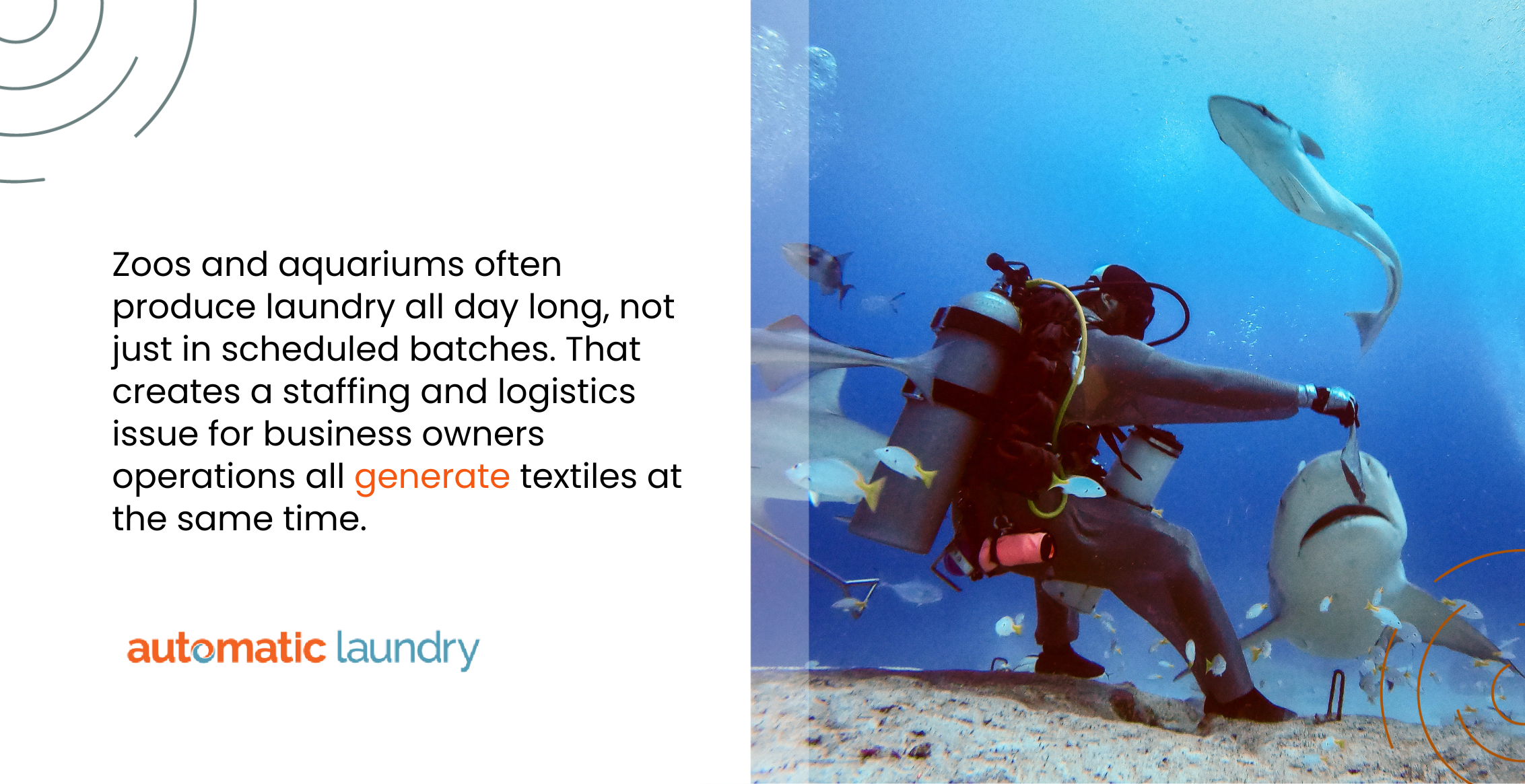
Zoos and aquariums often produce laundry all day long, not just in scheduled batches. That creates a staffing and logistics issue for business owners, especially when animal areas, public-facing spaces, and back-of-house operations all generate textiles at the same time. A laundry company can support this by creating predictable pickup and delivery schedules that match the facility’s pace.
Volume also affects how quickly items must return to service. Bedding, towels, and keeper gear may be needed the same day again, so turnaround time becomes a critical factor. Facilities with seasonal attendance spikes or special events may need extra support during busy periods, which makes flexible service even more valuable. The right partner helps reduce bottlenecks and keeps operations moving without forcing staff to manage laundry as a separate burden.
Choosing the right laundry company
Business owners should look for a provider that understands more than stains and stain removal. The best laundry company will know how to manage sanitation, handle specialized fabrics, and create a system that supports high-use environments. Experience with animal care or similarly regulated industries is a major advantage, since it suggests the provider already understands contamination control and heavy-duty processing.
It also helps to look for service consistency, clear communication, and the ability to scale with changing demand. Facilities should ask how the company handles sorting, load separation, drying, and turnaround timing. A good laundry partner should reduce pressure on staff, not add to it. For zoos and aquariums, that kind of support can improve cleanliness across the whole operation.
Make laundry support work for your facility
Zoos and aquariums need laundry systems built around sanitation, odor control, and specialized textile care. Those needs are too important to treat as a standard commercial wash service, especially when they affect animal health and staff efficiency. A trusted laundry company can help your facility stay clean, organized, and ready for daily demands.
Automatic Laundry can help business owners simplify specialized laundry care with dependable service designed for demanding operations. If your facility needs a better way to manage high-volume laundry, now is the time to explore a partner that understands the pace and standards of animal care environments.
