



Learning how to use a laundry machine starts with checking whether your everyday habits fit the clothes and equipment in front of you. You might be washing independently for the first time, fitting laundry around a busy schedule, or following a routine you learned years ago. Whatever your experience level, it’s worth taking a fresh look at the steps you repeat each laundry day.
Conversations about generational laundry habits can be interesting, but age alone doesn’t tell you who measures detergent carefully or reads every clothing label. These eight mistakes aren’t exclusive to Gen Z, Millennials, Gen X, or Baby Boomers. They’re practical examples of habits anyone can reconsider, not a ranking of which generation does laundry best.
Think of the laundry room as a place to compare useful ideas rather than judge someone else’s routine. A long-time laundry veteran might have a helpful sorting system, while a first-time resident might remind everyone to check an unfamiliar machine’s instructions. The goal is to keep what works, question assumptions, and match each load to the care it needs.
How to use a laundry machine with better habits at any age
The best starting point is instructions, not assumptions. Check the clothing labels, detergent directions, and machine guidance before starting. These three sources help you choose a routine that fits the current load instead of repeating the same steps automatically. The American Cleaning Institute recommends following fabric-care labels and product instructions to avoid damaging clothes.
Mistake 1: Guessing the detergent amount
A quick pour may feel convenient, especially when you’ve used the same detergent for years. However, switching products or changing load sizes is a good reason to check the directions again.
More detergent doesn’t automatically mean cleaner clothing. Too much or too little detergent can leave clothes less clean than the correct amount.
Use the package’s measuring guidance and account for any directions about load size, soil, or water conditions. Don’t assume a familiar capful works for every load.
Mistake 2: Using the wrong detergent for the washer
Moving into a new community can mean using equipment different from the washer you learned on. Before starting a load, check whether the machine requires high-efficiency detergent.
HE detergent is formulated for machines that use less water. Look for the appropriate product labeling and follow the washer’s posted instructions. Familiarity with one machine doesn’t mean every shared washer has the same requirements.
Mistake 3: Packing the drum too tightly
Trying to finish everything in one load can be tempting when time is short. However, clothing needs room to move during washing. Overloading is a main culprit of poor soil removal, according to the Cleaning Institute.
Instead of squeezing every item into one load, follow the machine’s capacity guidelines for better results.
A full load and an overpacked load aren’t the same thing. ENERGY STAR recommends washing full loads to make efficient use of energy, but that advice doesn’t mean exceeding the washer’s capacity.
Mistake 4: Choosing one water temperature for everything
A familiar temperature setting can become an automatic choice, whether you learned it recently or decades ago. Take a moment to check whether it suits the current load.
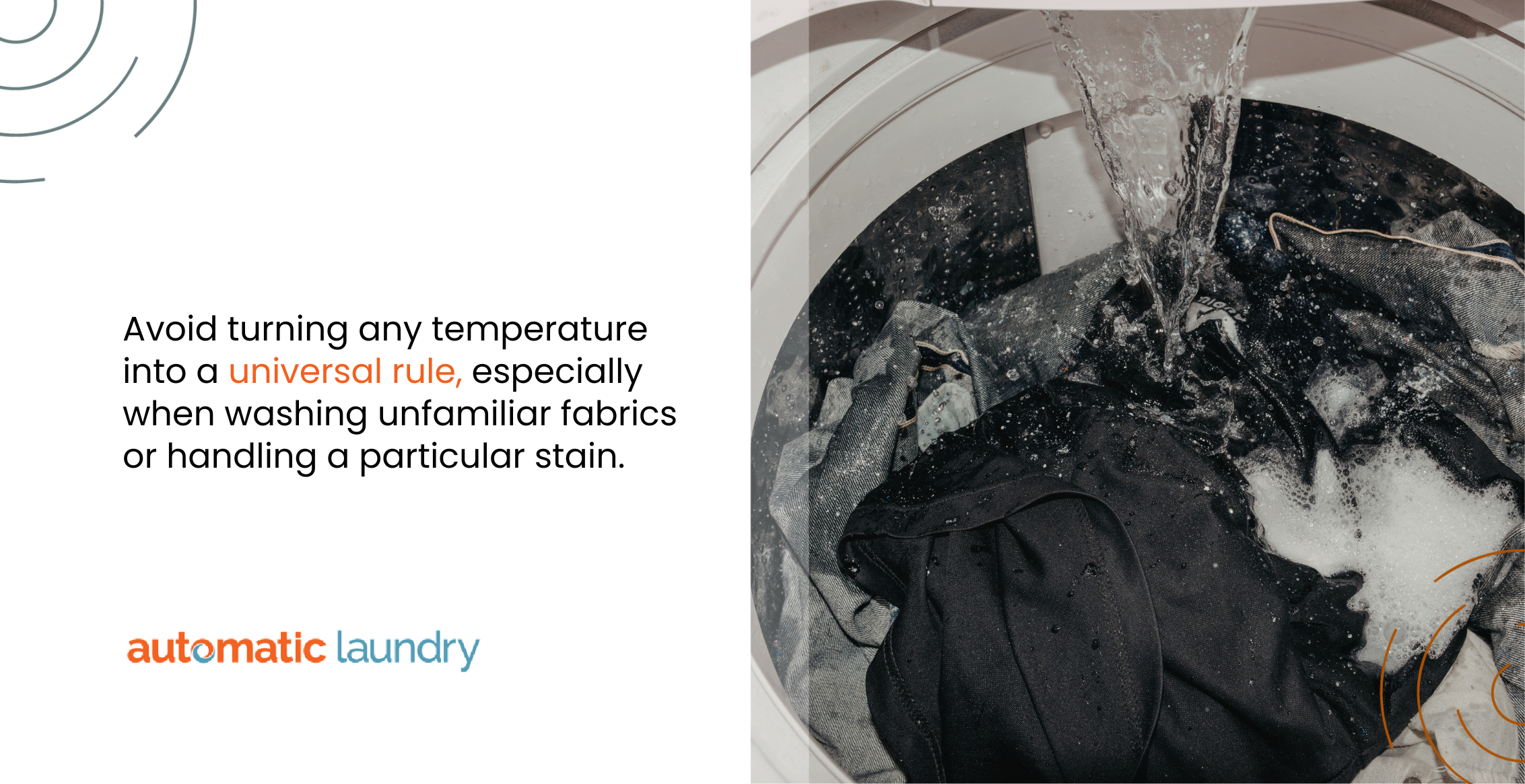
Cold water is appropriate for many routine loads. ENERGY STAR recommends it for energy savings. However, laundry challenges like oily stains may require a different approach. Read garment labels and detergent directions before choosing. Avoid turning any temperature into a universal rule, especially when washing unfamiliar fabrics or handling a particular stain.
Mistake 5: Skipping care labels and sorting
Putting everything into one load saves preparation time. However, it overlooks differences in color, fabric, and washing requirements. Sorting clothes and checking care instructions before selecting washer and dryer settings is a better approach.
Start with the labels on unfamiliar garments, then group items with compatible washing needs. A favorite shirt may need a different cycle from sturdy towels, even if they’re the same color.
Mistake 6: Adding products without checking their purpose
An extra product should have a clear role in your routine. Don’t assume every laundry additive improves cleaning or belongs in the same dispenser.
Scent beads, for example, add fragrance rather than replacing detergent or softening clothes.
Before using an additive, read what it does, how much to add, and where to place it. Follow the specific package and machine instructions. Even a product recommended by a friend or used in your family for years still deserves that quick check.
Mistake 7: Drying every load on the same setting
Drying deserves the same attention as washing. Heavy towels and lightweight clothing don’t necessarily need the same drying routine.
Separate heavier items from lighter clothing to avoid over-drying. Use a moisture sensor when the machine offers one, while following garment-care instructions.
Check the lint screen according to the laundry room’s directions. A good rule of thumb is to clean it before and after each load. However, you should leave vent maintenance to the people responsible for the equipment.
Mistake 8: Leaving finished loads in shared machines
Even a well-washed load can create a shared-space problem when it stays in the machine while neighbors wait. Set a timer and return promptly when the cycle ends. Follow posted rules for completed loads, remove your belongings, and leave the area tidy.
This isn’t a question of age or laundry experience. It’s a practical courtesy that helps everyone use the laundry room more comfortably.
Build a better laundry routine with automatic laundry
Knowing how to use a laundry machine means staying open to small adjustments, even when your routine feels familiar. It’s OK to share useful habits across generations. However, let the current clothing, products, and equipment guide each load.
Ready to put these tips into practice? Explore Automatic Laundry’s resources for machine-use guidance, sorting advice, payment help, and other practical tools. Start with the instructions for your community’s equipment and make your next laundry day simpler.
