

A modern laundry system is critical in long-term care because high-soil laundry loads are part of everyday operations. High-soil refers to linens and garments contaminated with urine, feces, blood, and other body fluids that require careful handling to protect residents and staff. In these settings, frequent bed and clothing changes, ongoing incontinence, and higher acuity residents keep the demand for fresh linens consistently high. That constant volume places pressure on existing processes and equipment, especially during outbreaks or peak census.
High-soil laundry also carries clear clinical and regulatory risk. Improper handling can contribute to the transmission of infections, unpleasant odors, and visible staining that undermine both family and patient confidence. Regulators and surveyors pay attention to how soiled and clean items are stored, processed, and documented. There are direct business implications as well, including increased staff time spent on rewashing, greater strain on washers and dryers, higher linen replacement costs, and potential impact on survey outcomes and quality ratings.
Safe, efficient practices for handling high-soil laundry
Safe, efficient handling of high-soil laundry starts at the point of care. Staff should place soiled linens and garments directly into lined, hands-free hampers instead of setting them on floors, furniture, or equipment.
Linens should not be shaken, since this can spread contaminants into the air and onto nearby surfaces. Gross soil must be carefully removed and disposed of before bagging to prevent bags from leaking or rupturing. Leak-proof, clearly labeled bags or carts are especially important when handling isolation or other high-risk items.
Collection and handling
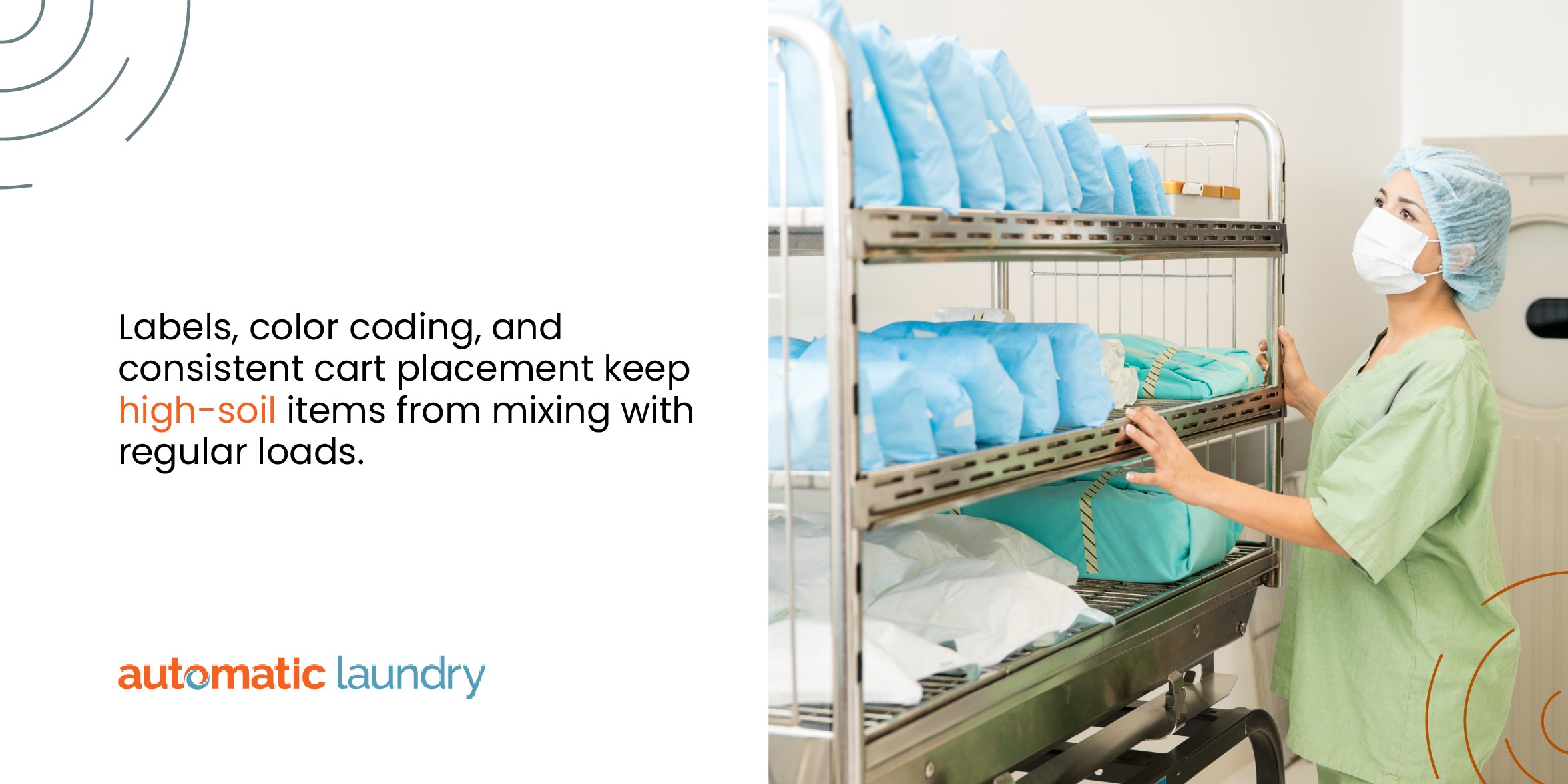
Collection practices shape the rest of the process. Clear routines help staff move quickly while still protecting residents, co-workers, and the environment. Labels, color coding, and consistent cart placement keep high-soil items from mixing with regular loads. When a laundry system supports these habits with appropriate carts, bag stands, and access to supplies, staff can maintain safer workflows with less confusion.
Separation and workflow
Physical separation of “dirty” and “clean” zones is essential to prevent recontamination of freshly processed textiles. Soiled items should travel in one direction only, from collection through washing and drying to clean storage, without crossing paths with finished linens. Dedicated carts for clean and soiled laundry, or thorough disinfection between uses, protect the integrity of each load. Clear workflow patterns also make it easier for staff to follow hand hygiene and PPE practices consistently.
Staff safety and training
The people handling high-soil laundry need protection and clear guidance. Standard PPE, such as gloves, gowns, and eye or face protection, helps reduce exposure risk, particularly when splashing is possible. Regular training refreshers keep procedures for bagging, loading machines, and separating high-risk items top of mind. Laundry staff should participate in infection prevention programs and outbreak planning so they understand how their daily routines support resident safety and regulatory compliance.
Building a laundry system that can handle high-soil loads
A system that can keep up with high-soil loads starts with the right equipment. Size commercial-grade washers and dryers to match resident census and soil levels to prevent overloading and constant backlog. Programmable controls that adjust water temperature, time, and mechanical action make it easier to select cycles tailored to heavily soiled healthcare textiles instead of relying on guesswork. Automatic chemical dosing delivers consistent disinfection and fabric care, while thoughtful settings can support responsible water and energy use.
Room layout also plays a major role in performance. Clear separation between dirty and clean sides, short travel paths, and easy access to carts and storage all support faster, safer movement of laundry through each step. Features such as high-speed extraction, moisture sensing, and cycle monitoring shorten turnaround times and reduce wear on linens and equipment. Remote monitoring and usage data give managers better insight into peak times, downtime, and maintenance needs, which helps keep operations steady during high-demand periods.
A trusted partner can help design and maintain this type of environment. Automatic Laundry works with long-term care, senior housing, and multi-housing communities to design and install systems that meet healthcare-level demands without overwhelming available space. Ongoing maintenance and responsive support keep machines performing reliably even when high-soil loads spike. A modern laundry system across multiple properties also makes it easier to standardize procedures and deliver a consistent resident experience, regardless of building or unit.
How clean laundry supports comfort, dignity, and lower stress
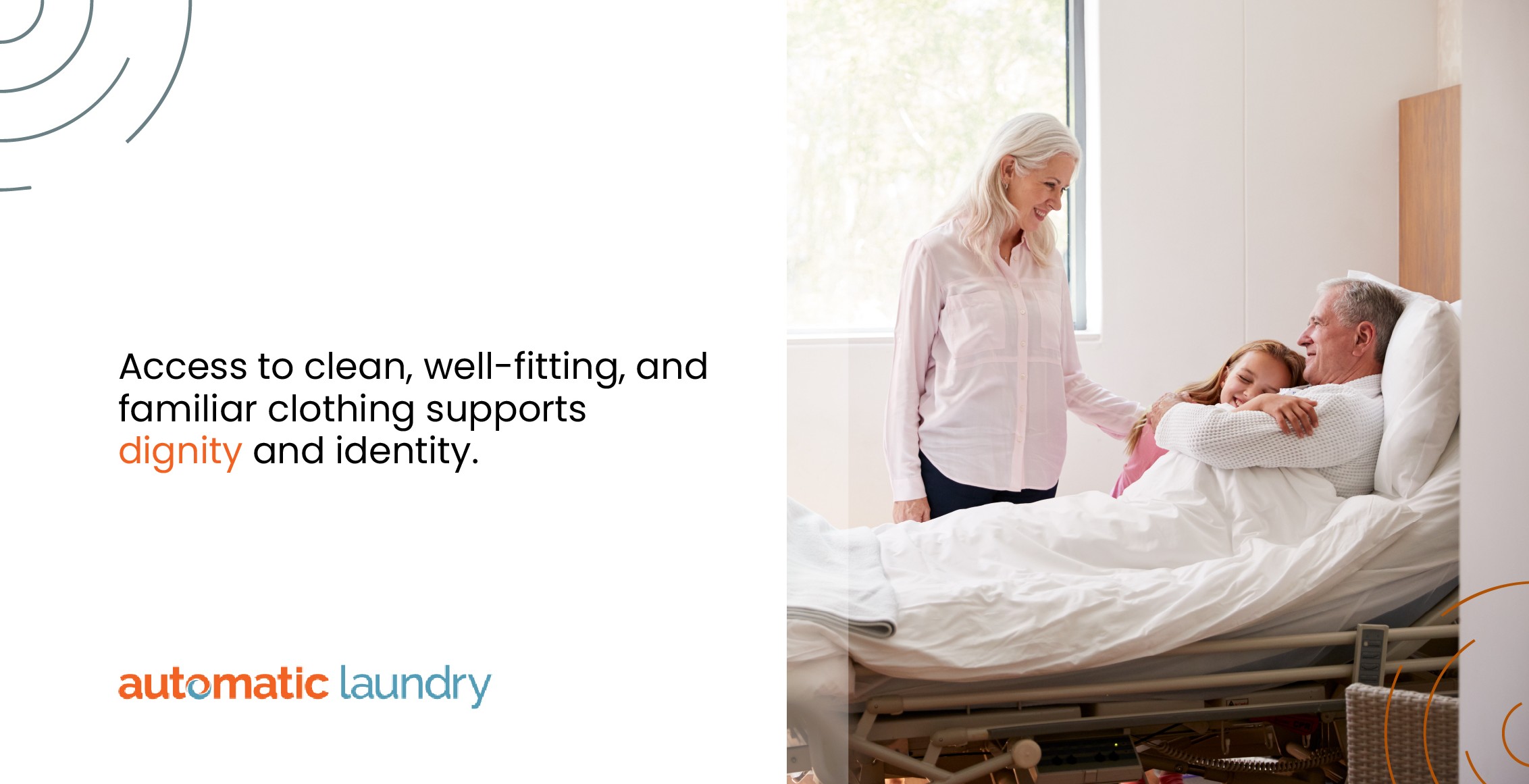
Clean, fresh linens affect daily life in long-term care as much as any other part of the care plan. Residents who spend long periods in bed or chairs rest more comfortably when sheets are soft, dry, and promptly changed, which can also reduce skin irritation and discomfort during personal care. Access to clean, well-fitting, and familiar clothing supports dignity and identity, especially for people in memory care or long-stay settings who rely on routine and personal items to feel at home.
A reliable laundry system helps create a calmer emotional climate, with fewer odors, less visible soiled linen, and a steady supply of towels and bedding for residents and visiting families. Consistent processes also reduce last-minute linen shortages and rework for staff, allowing caregivers to spend more time on direct interaction and support.
Turning best practices into action
High-soil laundry will always be part of long-term care, but it does not have to strain your staff, your residents, or your budget. When collection habits, infection control practices, and equipment work together, your facility can protect residents, support staff, and present a clean, dignified environment that families trust. A modern laundry system, supported by the right partner, turns laundry from a constant problem into a reliable backbone of daily operations.
Automatic Laundry specializes in designing, managing, and supporting community and on-premise laundry systems for long-term care and senior housing properties. If high-soil loads are stretching your current setup, this is the time to reassess and upgrade so your team can focus more on care and less on catching up with laundry.
