

In residential communities, especially those relying on shared laundry rooms, a forgotten load can happen to anyone. When clothes sit in a damp washer overnight, odors set in quickly due to bacterial growth and a lack of airflow. The good news is that restoring freshness is usually straightforward with the right steps and a bit of machine care. As more residents turn to community laundry systems supported by modern equipment and app-based tools, understanding how to recover a load and prevent the issue from happening again becomes increasingly important.
Forgotten laundry doesn’t need to derail your day, and it doesn’t necessarily require rewashing the same items over and over. The average American family completes about 300 loads of laundry each year, and ENERGY STAR reports that certified washers use about 20% less energy and about 30% less water than standard models. When residents rewash loads unnecessarily, these savings are lost, which makes effective odor removal and good machine care even more important.
1. Quick Remedies to Freshen Laundry After It Sat Wet Overnight
The fastest way to freshen laundry that has been left in the washer too long is to run a second cycle with targeted odor-fighting ingredients. Most residents rely on common household solutions like baking soda or white vinegar, which help neutralize odors rather than simply masking them. According to the American Cleaning Institute, vinegar can help break down odor-causing residues, while baking soda balances pH levels in fabrics. Add either product directly into the drum and run a warm cycle to reset the load. For heavily saturated odors, combining both vinegar in the fabric softener tray and baking soda in the drum often delivers better results.
Even high-quality detergents sometimes struggle to fully eliminate odors on their own, especially when clothes have been damp for 8–12 hours. If your building uses modern machines, you may notice that high-efficiency washers respond best to low-sudsing detergents. Too much detergent leaves residue, trapping unpleasant smells even after rewashing. These blogs break down detergent usage recommendations that apply across machine types, and following those guidelines helps ensure cleaner, fresher loads in shared laundry environments.
2. Machine Care Matters When Freshening Laundry
Odors from forgotten laundry often persist because the washer itself needs attention. In shared laundry rooms, moisture buildup, leftover detergent, and debris can create a musty environment inside the drum, which makes it harder to freshen laundry even after a second wash. Regular machine care helps prevent these issues and supports better results for everyone in the building. While property managers usually handle scheduled cleaning, residents can contribute to a cleaner laundry environment by following simple maintenance habits and reporting any machine concerns.
Helpful machine care habits residents can follow include:
- Wipe the rubber gasket on front-load washers. Residue and moisture often collect in the gasket, so cleaning it periodically helps reduce musty odors that can transfer to clothes.
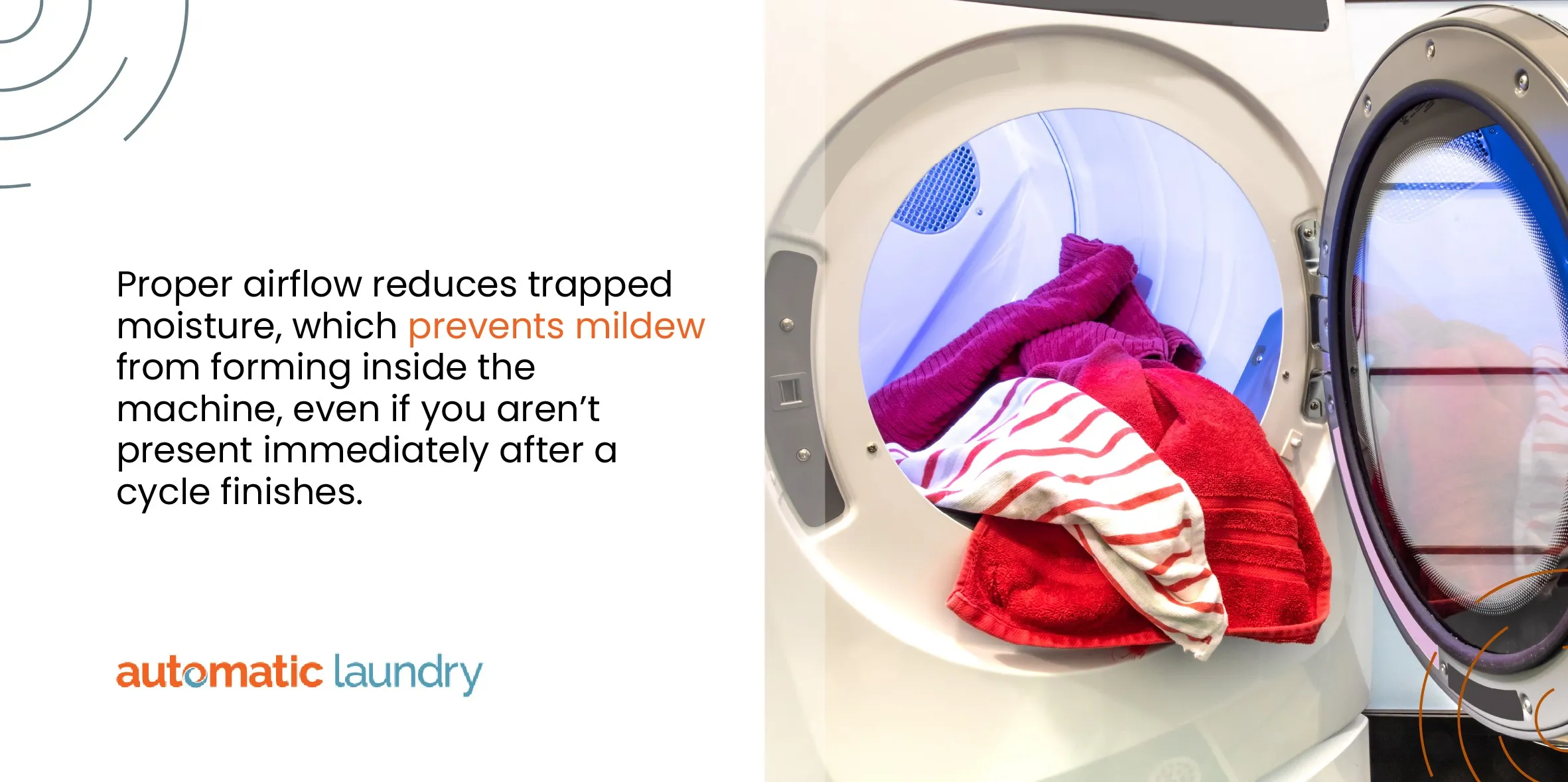
- Leave the washer door slightly open when possible. Proper airflow reduces trapped moisture, which prevents mildew from forming inside the machine, even if you aren’t present immediately after a cycle finishes.
- Use the correct amount of detergent. High-efficiency washers are sensitive to oversudsing, and excess detergent leaves behind buildup that contributes to lingering smells in future loads.
- Report machines that show signs of odor, buildup, or malfunction. Submitting a service request promptly ensures maintenance teams can address issues before they affect multiple residents.
3. Preventing Odors Before They Start
While nighttime distractions or busy schedules can make it easy to forget a load, preventive habits significantly reduce the need to freshen laundry later. Setting mobile reminders, whether through your phone or community laundry apps, helps ensure you return to your load promptly. Many modern systems send alerts when cycles finish, allowing residents to avoid moisture-related odors entirely. These reminders are especially valuable in large buildings where washers tend to fill quickly and turnaround time matters.
Another preventive step is loading the washer correctly. Overloading prevents proper rinsing and spinning, which leads to damp, heavy fabrics that trap odors more quickly if left sitting. Extremely small loads may also fail to tumble effectively. According to Coollblue, well-functioning washers operating at 1400 RPM typically leave about 50 percent residual moisture in properly loaded fabrics, meaning half the water weight has already been removed before drying begins. Following the recommended capacity guidelines posted on machines or listed in Front Load Washer Instructions helps support proper spin performance, improve airflow, and reduce drying time, all of which play a role in keeping laundry fresh.
4. Fabric-Specific Considerations When Freshening Laundry
Some fabrics develop odors more quickly than others, and understanding these differences helps determine how to freshen laundry effectively. Athletic wear, for example, uses synthetic fibers designed to wick moisture, yet these materials can hold onto bacteria and sweat residues more stubbornly than cotton. According to a research study comparing cotton and polyester fabrics after exercise, polyester shirts smelled significantly less pleasant and more intense than cotton shirts, with trained odor panels consistently rating synthetic materials as more offensive. A warm rewash with an odor-targeting additive typically works best for synthetic items. For towels and denser fabrics, selecting a hot cycle can improve results if the care label allows it. Referring to resources like Choose Water Temperature ensures you wash each fabric type appropriately.
Delicate items such as wool, lingerie, or lightweight knits should be treated more gently, even if they have sat overnight and require odor removal. Using specialty detergents or running a gentle cycle prevents stretching or fabric wear. If residents rely on shared laundry rooms, placing delicate items in mesh wash bags reduces the risk of damage while still allowing odors to be removed effectively. These small adjustments help preserve clothing quality and reduce the need to replace garments prematurely.
Conclusion
Forgotten laundry is a common issue in shared residential buildings, but a few reliable methods can help residents restore freshness quickly and prevent odors in the future. Understanding how to freshen laundry, maintain washer cleanliness, and establish effective habits ensures better results every time you use your community laundry room. If you need additional support or want guidance on improving your building’s laundry experience, contact us today. Our services can help with freshening laundry and keeping your clothes in the best condition.
