
Smart dryers give residents in multi-family units a better way to avoid the common issue of clothes shrinking in shared laundry rooms. Many people have watched a favorite t-shirt or sweater come out of the dryer a size too small, especially in buildings with older machines or commercial-grade laundry appliances. High temperatures and variable settings in standard dryers are the leading causes of shrinkage. In a busy laundry room, different users often select long, hot cycles without realizing how quickly these settings can damage cotton, wool, or blended fabrics.
Heat is especially tough on natural fibers, and dryers with strong, extended cycles only increase the risk. This can be frustrating for anyone trying to keep their wardrobe looking its best, as even one session on the wrong setting can cause noticeable shrinkage.
Smart dryers tackle this problem directly. Their built-in sensors and custom programs make it easier to dry clothes at the right temperature and stop cycles as soon as items are done, rather than letting them cook in high heat. Along with these advances, there are simple steps residents can take at home to revive shrunken garments, from gentle stretching to low-heat drying techniques.
Why clothes shrink in the dryer (and how smart dryers help)
Heat and agitation are the main reasons why clothes shrink in shared laundry rooms. High temperatures break down the natural structure of fibers, such as cotton and wool, causing them to contract and lose their original shape. The constant spinning and tumbling action inside a dryer also tightens the weaves of fabrics, which leads to further shrinkage. Natural fibers are especially prone to these changes, so items made from cotton, wool, or linen shrink more than most synthetic fabrics.
Over-drying makes the problem worse because the longer clothes are exposed to heat, the tighter their fibers become. Dryers in multi-family buildings often differ in efficiency, and older models or mismatched settings can accelerate fiber contraction. Selecting a random cycle or using the default high-heat option is risky, especially for residents with mixed loads or limited control over machines.
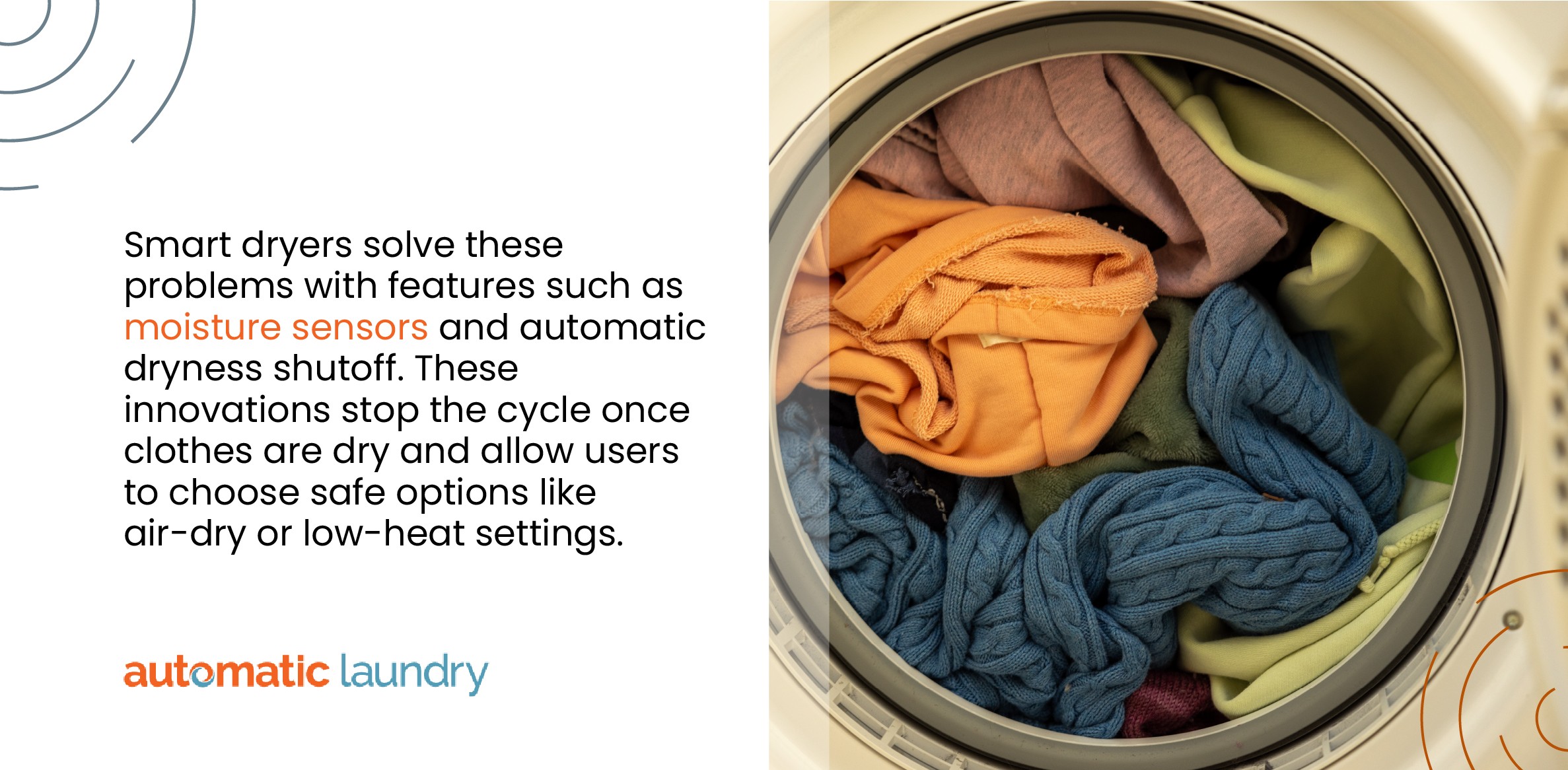
Smart dryers solve these problems with features such as moisture sensors and automatic dryness shutoff. These innovations stop the cycle once clothes are dry and allow users to choose safe options like air-dry or low-heat settings. Some models even offer gentle tumbling or special fabric-protection programs. Knowing these causes helps residents pick cycles that are gentle on clothes, so garments last longer and look better after every wash.
Simple repair tricks that work
Residents can revive shrunken clothes easily without special tools. For sturdy knits, such as cotton t-shirts and sweatshirts, lightly dampen the garment and lay it on a flat towel. Gently stretch to its original size and leave it to air-dry flat. Delicate fabrics like silk or fine wool respond well to the water-and-conditioner method. Briefly soak the item in lukewarm water mixed with a mild conditioner, then gently stretch while damp, rinse lightly, and air-dry flat.
Wool blends benefit from steam refresh. Use the steam setting on your iron or a garment steamer to relax fibers, gently reshape, and lay flat until dry. Smart dryers often feature “air fluff” or gentle dry cycles, which help minimize damage if you need a machine step. Always avoid harsh tugging or wringing. Testing these methods on a small area first reduces risk, and some materials may only partially recover after shrinking.
How to prevent shrinkage in multi-family settings
Keeping your favorite clothes looking their best can be a challenge in a busy multi-family laundry room. Differences in machine models, older equipment, and high-heat dryer cycles often put residents at risk of unwanted shrinkage, especially for garments made from natural fibers.
Here are five proven ways to prevent shrinkage:
- Use sensor-based or automatic cycles. Many smart dryers available in multi-family buildings come with sensor-based or automatic dryness cycles. These features stop the drying process once clothes reach the right moisture level, helping prevent over-drying, which is a major cause of shrinkage. Instead of relying on the timer, these cycles give each load just enough drying time to protect both fabrics and fit.
- Choose lower heat or air-dry settings. Lower heat and air-dry options are especially important for cotton blends and wool garments. High heat can quickly contract fibers, so selecting a gentle cycle or an “air fluff” program will keep clothes closer to their original size. If you must use a shared laundry room dryer, look for machines that clearly label these protective cycles.
- Dry similar fabrics together. Sorting laundry by fabric type helps prevent delicate items from overheating or being exposed to harsh tumbling. Drying thick towels with lightweight tops or sweaters increases the risk that the latter will shrink or become misshapen.
- Remove clothes promptly and test shared machines. Removing items as soon as the cycle finishes reduces their exposure to residual heat. If your building uses shared machines with unfamiliar settings, run a quick test cycle with a towel or an older shirt before placing valuable garments inside.
Smart dryers reduce shrinkage for everyone by offering real-time moisture sensing and adaptive drying. Their precise cycles support longer garment life and greater resident satisfaction in multi-family communities.

Quick-start checklist for residents
The right laundry habits can protect clothes from shrinking, especially in busy multi-family buildings with shared dryers. Following a simple routine makes it easier to keep every load safe and sized correctly. Smart dryers in many communities support these good habits with protective cycle choices and precise drying sensors.
- Sort laundry by fabric type and weight before washing or drying.
- Read every garment’s care label to match cycles with fiber needs.
- Choose no-heat or low-heat dryer settings for delicates.
- Remove items promptly when the cycle finishes to prevent extra heat damage.
- For stubborn shrinkage, try flat-stretch or conditioner methods, then let garments air-dry for the best results.
Protect your wardrobe investment
Shrinkage is a frequent problem in multi-family laundry rooms, often caused by high heat, long drying times, and mixing different fabric types in shared machines. Residents have seen sweaters, tees, and jeans shrink, but there is a way forward. Smart dryers introduce technology that helps protect each item with gentle cycles, moisture sensors, and automatic shutoff features.
Being informed makes a difference. Residents who stick to lower heat settings, promptly remove clothes, and sort their laundry properly enjoy more consistent results. Simple home rescue methods, like flat-stretching or conditioner soaks, also give clothing a second chance after an accidental shrinking. Exploring smart dryer models or updating laundry room settings offers a practical step for any building manager or resident community. Pass this guide along and support better laundry outcomes throughout your building.
