

Laundry room equipment sits at the center of a clean, safe experience for every animal and person who walks through your doors. Clean towels, bedding, and grooming smocks indicate that your shelter or shop prioritizes hygiene and infection control, which fosters trust among adopters, clients, and staff. Consistent laundry habits help reduce odors, visible stains, and cross-contamination between animals, especially in busy grooming and intake areas.
Greener practices and upgraded laundry room equipment also create long-term value for your operation. High-efficiency machines use less water and energy per load, helping control utility bills without sacrificing cleaning power. Thoughtful cycle selection and gentler chemistry support sensitive skin and paws while still removing heavy soils like fur, dander, and accidents. Over time, these choices extend the life of linens and reduce the need for frequent replacements. A smart approach to laundry helps protect animal health, staff well-being, and your budget in one coordinated effort.
Why eco-friendly laundry matters in pet environments
Eco-friendly laundry practices matter in pet environments because every load carries more than everyday dirt. Towels, bedding, and grooming smocks collect fur, dander, urine, and other bio-contaminants that often require frequent, hot-water washes. Those repeated heavy washes can drive up water and energy use and cause fabrics to thin, fray, and lose absorbency faster than expected. Thoughtful routines and efficient laundry room equipment help protect your linens and your budget over time.
Sensitive animals and staff benefit when harsh chemicals, strong fragrances, and residue are reduced in frequently laundered items. Gentler detergents, accurate dosing, and thorough rinsing lower the risk of skin irritation, respiratory discomfort, and allergic reactions. Cleaner, softer linens support animal comfort during grooming, boarding, and recovery.
Energy- and water-saving systems give shelters and grooming shops a way to stretch limited funds while still meeting high cleanliness standards. Lower utility bills free up resources for medical care, enrichment, and staffing. Visible commitment to greener laundry can also resonate with donors and customers who value responsible, compassionate operations.
Upgrading laundry room equipment for greener animal care operations
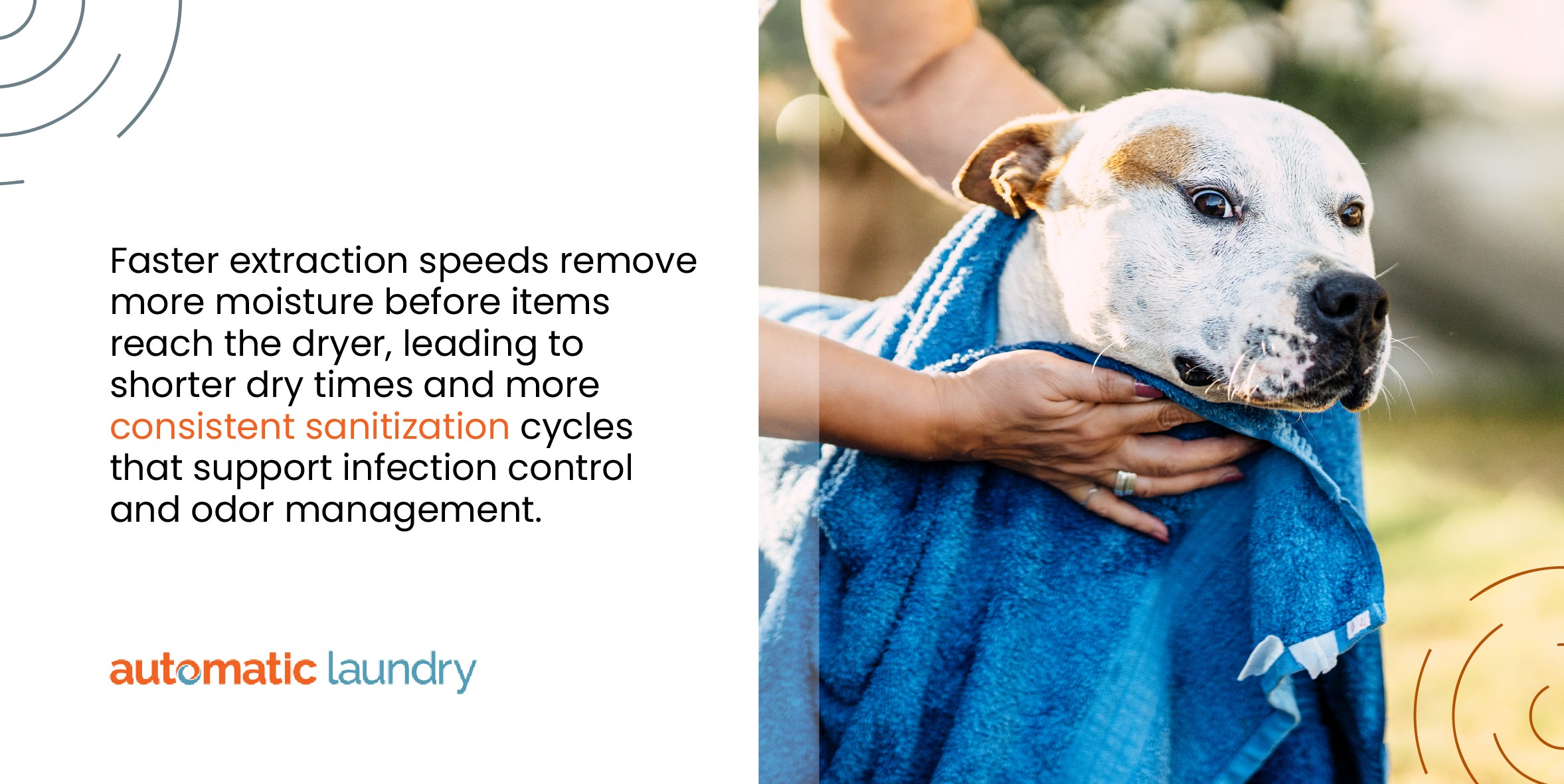
Modern laundry room equipment plays a direct role in how green an animal care operation can become. High-efficiency commercial washers and dryers lower water use per pound of laundry, which is especially valuable when handling constant loads of towels, bedding, and reusable pads. Faster extraction speeds remove more moisture before items reach the dryer, leading to shorter dry times and more consistent sanitization cycles that support infection control and odor management.
Thoughtful equipment choices strengthen sustainability goals and daily workflows. Programmable cycles for heavily soiled loads, automatic chemical injections, and higher G-force extraction help staff match settings to real-world conditions instead of relying on guesswork. Moisture sensing and large-capacity drums protect bulky bedding and help prevent over-drying that can wear out fabrics and waste energy.
Modern controls and, where available, remote monitoring give managers insight into usage patterns and help teams choose eco cycles that fit their mix of loads. Partnering with a managed laundry vendor who supplies, installs, and maintains this equipment keeps machines running efficiently so shelters and grooming shops can focus on quality care.
Smarter processes to reduce energy and water use
Smart laundry room equipment supports greener operations, but daily habits determine how well each cycle performs. Sorting loads by soil level and fabric type helps avoid over-washing lightly soiled items while protecting delicate bedding, towels, and reusable pads from unnecessary wear. Light grooming smocks, microfiber cloths, and kennel blankets benefit from separate cycles so staff can choose the right time, temperature, and chemistry for each group.
Running full, properly loaded machines creates better contact between water, detergent, and fabrics, which improves cleaning results and reduces wasted energy. Overstuffed drums prevent items from moving freely and often lead to incomplete rinsing and more rewashes. Lower-temperature cycles can handle many routine loads when paired with higher G-force extraction and dryer moisture sensors that shorten dry times without over-drying.
Clear workflows round out an efficient, eco-friendly operation. Designated hampers, labeled sorting stations, and posted cycle guides help staff move quickly during peak intake or grooming hours. Standard procedures for pre-treating heavy soils and handling rewash items keep linens moving forward instead of piling up and consuming extra labor.
Choosing pet-safe, eco-friendly detergents and additives
Eco-friendly detergents and additives support the work that modern laundry room equipment performs in animal-focused settings. Towels, bedding, and smocks touch pets with sensitive skin and often contact open areas or irritated spots. Harsh chemicals, strong fragrances, and heavy residues can cause itching, redness, or respiratory discomfort for animals and staff. Gentler, pet-conscious products create a cleaner, safer experience without sacrificing cleaning power.
Thoughtful product choices start with ingredient awareness. Concentrated, biodegradable detergents that work well in high-efficiency machines reduce packaging waste and help limit chemical discharge into wastewater systems. Oxygen-based boosters and sanitizers can support odor and stain removal when used according to manufacturer guidelines and followed with thorough rinsing. Simple, fragrance-free formulas are often the best fit for grooming and shelter environments.
Clear handling practices complete the picture. Staff need easy-to-follow dosing instructions, secure storage for all chemistry, and labeled containers for any secondary dispensing. Consistent training helps prevent overuse of products, cuts down on residue, and protects the performance and longevity of linens and equipment.
Extending linen life and reducing waste
Extending linen life is one of the most practical ways to support sustainability and protect a tight replacement budget. Correct water levels, appropriate cycles, and gentler chemistry help towels, blankets, and reusable pads stand up to the constant washing that busy animal environments require. Thoughtful settings allow fibers to release fur, dander, and stains without the harsh mechanical action and aggressive products that can thin fabrics or cause fraying long before the end of their useful life.
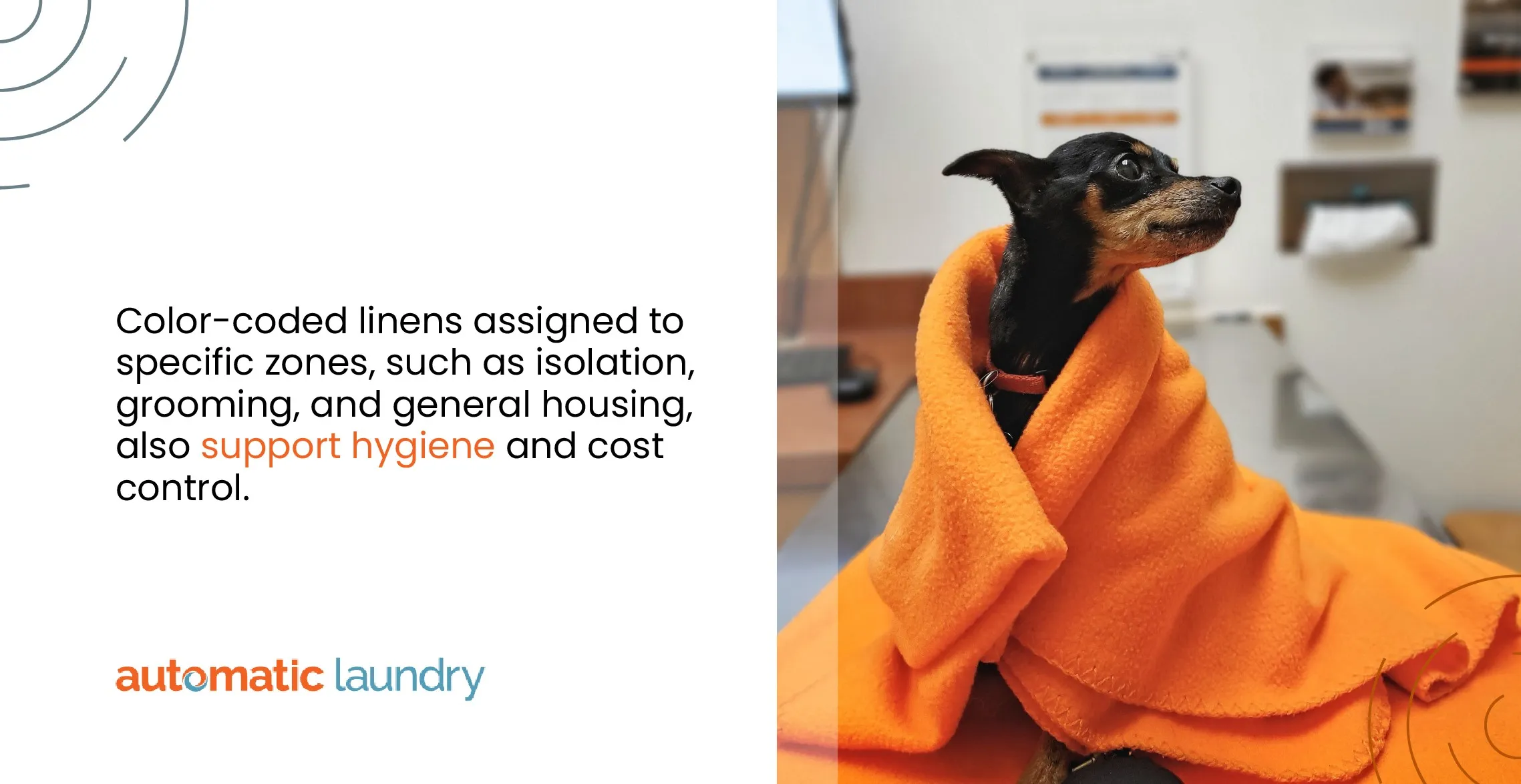
Color-coded linens assigned to specific zones, such as isolation, grooming, and general housing, also support hygiene and cost control. This simple system reduces cross-contamination and cuts down on unnecessary rewashing when items stay in their designated areas. Regular care for laundry room equipment, including cleaning lint filters, checking door gaskets, and descaling washers, helps machines perform consistently and treat fabrics gently. Well-maintained equipment supports cleaner results in fewer cycles and extends the service life of every linen in rotation.
When to partner with a commercial laundry equipment expert
Laundry performance often signals when a change is overdue. Frequent breakdowns, rising utility bills, long dry times, and constant staff frustration all suggest that existing machines no longer match the demands of a busy animal care operation. Inconsistent results can also affect odor control, infection prevention, and the comfort of pets and staff.
A knowledgeable partner can help right-size laundry room equipment for your mix of towels, bedding, and reusable pads instead of relying on trial and error. Guided recommendations on eco-friendly cycles, chemistry, and loading practices support sustainability goals and daily workflows. Ongoing service and monitoring protect your investment and keep energy and water use in check.
Shelters and grooming shops that want cleaner results with less waste can start with a simple review. Evaluate current machines, track recent utility costs, and identify pain points in your laundry process. Then, connect with Automatic Laundry to explore efficient, pet-safe solutions tailored to your facility and your budget.
