
In 2025, shared laundry spaces have become a cornerstone of apartment living, student housing, and multifamily communities. While modern laundry appliances are far more advanced than the coin machines of decades past, residents still face a common frustration: shrunken clothes. Few things are more discouraging than pulling a once-perfect sweater out of the dryer only to discover it has transformed into a size too small. Fortunately, avoiding shrinkage is less about luck and more about knowing how to properly use the machines available in your community laundry room.
This guide offers practical strategies to help residents protect their clothes while getting the most out of shared laundry appliances. From paying attention to fabric care labels to making smart choices with wash cycles, these tips provide simple steps to extend the life of your clothing and reduce the risk of damage.
1. Always Read Fabric Care Labels
One of the most overlooked steps in laundry care is also one of the simplest: reading the care label on your garments. Clothing manufacturers provide detailed instructions on how fabrics should be washed, dried, and ironed. Labels often specify water temperature, cycle type, and whether an item should be tumble-dried or air-dried. Ignoring these instructions increases the risk of shrinkage, particularly for delicate fabrics such as wool, cotton, and linen.
In shared laundry settings, where machines often default to warm or hot cycles, residents should take extra care to follow label guidelines. For instance, many items labeled “cold wash only” will shrink noticeably if exposed to higher heat. Taking a moment to check the label can prevent costly mistakes and save favorite garments from early retirement.
2. Choose the Right Wash Temperature in Laundry Appliances
Heat is the primary culprit behind fabric shrinkage. Hot water causes natural fibers to contract, and this effect can be magnified in commercial-grade laundry appliances. Whenever possible, opt for cold or lukewarm water, especially when washing cottons, wools, or synthetic blends. Cold water is effective for most everyday laundry and has the added benefit of saving energy.
According to the American Cleaning Institute, switching from hot or warm water to cold water for both the wash and rinse cycle can save households between $60 and $200 annually, while cutting greenhouse gas emissions equal to driving roughly 1,000 miles. For residents using shared laundry appliances, that choice is even more impactful as it reduces energy strain on the building, lowers utility costs, and makes caring for clothes more affordable. In practice, consistently choosing cold water not only protects fabrics from shrinking but also supports broader sustainability goals within the community.

3. Avoid Overloading the Washer or Dryer
Many residents are tempted to stuff as many clothes as possible into a washer or dryer to save time or money. However, overloading machines creates friction between fabrics, reduces cleaning effectiveness, and traps heat unevenly, which can lead to shrinkage. Laundry appliances are designed to work best with a balanced load, leaving enough space for clothes to move freely.
According to Southern Living, following the two-thirds rule when loading both washers and dryers: fill the drum only about two-thirds full and leave the top third empty. This extra space allows clothes to move freely, ensuring that water, detergent, and air circulate properly. For residents using shared laundry appliances, this practice has two key benefits: it helps clothes come out thoroughly cleaned and dried the first time, and it reduces unnecessary strain on machines that many people rely on. By respecting this simple rule, residents can extend the lifespan of community appliances while protecting their wardrobe from uneven washes or shrinkage.
4. Select Gentle Wash and Dry Cycles
Cycle selection is another critical factor in protecting clothes from shrinkage. High-intensity or “heavy-duty” cycles often use higher agitation and longer spin times, which can damage fabrics. Instead, delicate or gentle cycles use slower spin speeds and shorter wash times, reducing the stress placed on your garments.
Dryers present similar challenges. Many residents simply default to the “high heat” setting without realizing the consequences. Fabrics exposed to prolonged high heat are much more likely to shrink. Instead, opt for “low heat” or “air dry” settings when possible. While it may take longer for clothes to dry, the trade-off is a garment that maintains its size, shape, and softness.
5. Remove Clothes Promptly After Cycles End
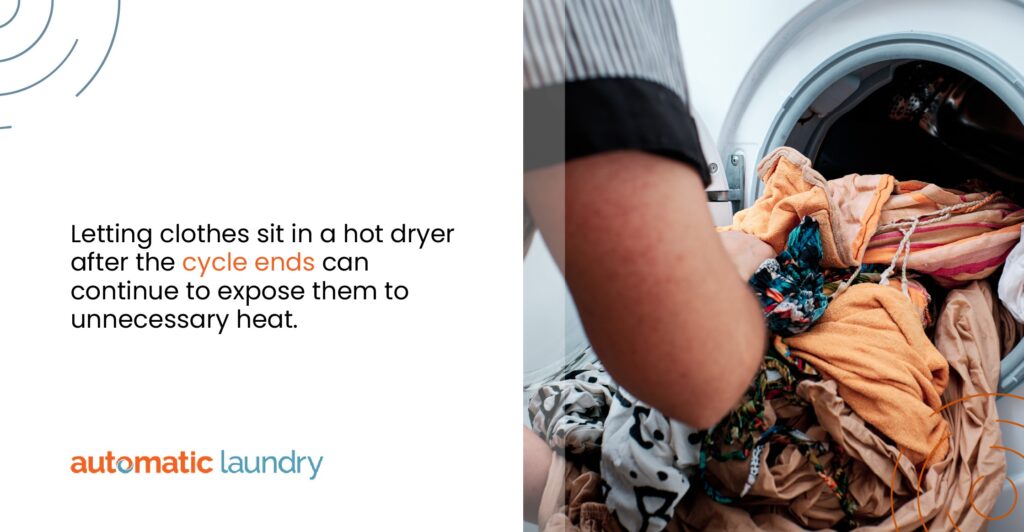
Letting clothes sit in a hot dryer after the cycle ends can continue to expose them to unnecessary heat. This extended exposure often contributes to additional shrinkage, particularly with cotton and wool garments. Promptly removing clothes helps minimize the impact of residual heat and reduces wrinkling, cutting down on the need for additional ironing.
Shared laundry appliances often come with apps or notifications to let residents know when a cycle is complete. Tools like LaundryConnect™ Pay make it easier to stay on top of timing and prevent clothes from sitting too long. Building a habit of removing laundry immediately is one of the simplest ways to extend garment life.
Conclusion
Shrinkage is a common frustration, but it is entirely avoidable with the right habits and an understanding of how shared laundry appliances work. By following care labels, choosing lower temperatures, avoiding overloads, and taking advantage of air drying, residents can protect their favorite garments and keep them looking new. Contact us today to learn how our services can help you protect your wardrobe and improve your laundry experience.
Sources
- The American Cleaning Institute (ACI) – Technical Brief: Benefits of Using Cold Water for Everyday Laundry in the U.S.
- Southern Living – What Really Happens When You Overload Your Washing Machine?
