


The laundry room of 2036 could look very different from what many properties have today. Smart washers and dryers, digital laundry payments, connected equipment, real-time machine status, energy-efficient technology, and data-driven maintenance are changing the shared laundry experience.
For property managers, the opportunity goes beyond replacing aging machines. A modern laundry room is a valuable property amenity that improves resident convenience, supports operational efficiency, reduces equipment downtime, and helps manage utility costs.
Residents are already accustomed to mobile apps, digital payments, real-time notifications, and instant access to information. Those expectations are increasingly extending to apartment amenities. Many of the technologies shaping the future of multifamily laundry are already available today.
Smart washers and dryers make laundry more convenient
Smart washers and dryers give residents greater visibility and control over the laundry process. Instead of walking to the laundry room only to find every machine is occupied, residents can check availability from their phones.
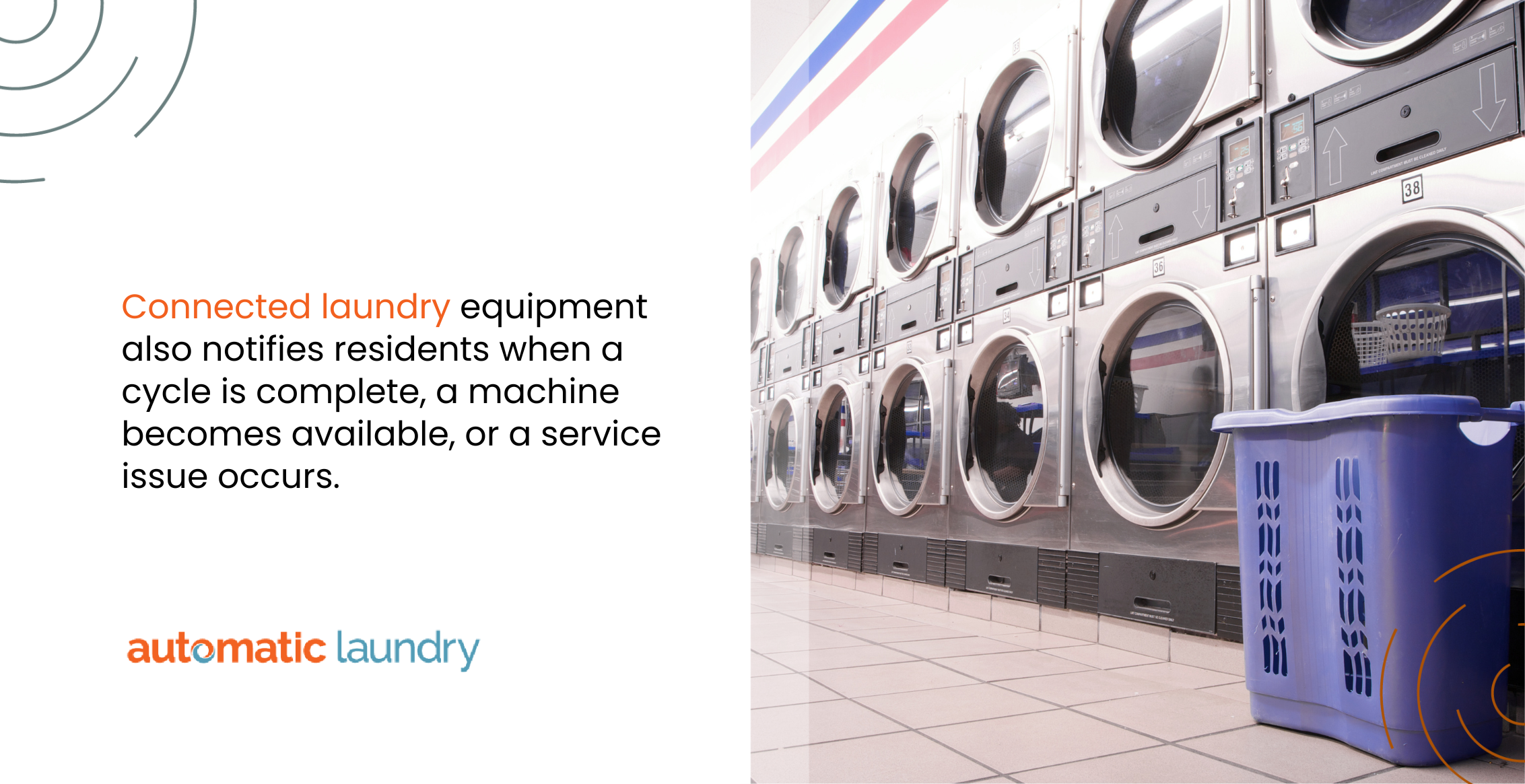
Connected laundry equipment also notifies residents when a cycle is complete, a machine becomes available, or a service issue occurs. Fewer wasted trips and forgotten loads make shared laundry facilities more dependable.
For property managers, connected equipment provides another important benefit. Service alerts identify certain problems before residents report them, allowing maintenance teams to respond sooner and reduce equipment downtime.
The goal isn’t to replace maintenance professionals. Smart technology provides better information, so property teams prioritize service needs and keep equipment operating reliably.
Digital laundry payments will become the standard
Coin-operated laundry rooms have served properties for decades. However, digital payment options are becoming increasingly important. Residents already use mobile wallets, credit cards, and apps for everyday purchases, making cashless laundry payments a natural next step.
A modern laundry room allows residents to pay through an app, mobile wallet, credit card, debit card, or stored account balance. This added flexibility makes laundry more convenient while reducing the work associated with collecting, counting, transporting, and managing coins.
Digital payment systems also provide property managers with useful transaction and usage information. That data helps teams understand how residents use laundry facilities and identify potential improvements.
Laundry data helps property managers make better decisions
Connected smart washers and dryers give property teams greater insight into machine status, equipment usage, service alerts, and payment activity.
That information answers practical questions like:
- Which machines receive the most use?
- When are laundry rooms busiest?
- Which washers or dryers generate repeated service calls?
- Does the property have enough capacity during peak periods?
These insights support better decisions about maintenance, equipment replacement, and capital planning.
For example, a property manager may discover it would be more cost-effective to replace a frequently repaired washer. Another property may find that adding dryer capacity would have a greater impact on resident satisfaction than replacing equipment that continues to perform well.
Data doesn’t replace management judgment. It gives property teams a clearer picture of what’s happening inside the laundry room.
Energy efficiency will become more important
Laundry equipment consumes water and energy, making efficiency an important consideration for multifamily properties and other shared laundry facilities.
High-efficiency commercial washers reduce water consumption compared with older models. Modern washers and dryers can also incorporate technologies designed to improve resource efficiency. ENERGY STAR provides efficiency criteria for commercial clothes washers, giving property managers a useful starting point when comparing equipment.
The purchase price shouldn’t be the only consideration when evaluating new laundry equipment. Property managers should also look at water and energy costs, expected usage, maintenance requirements, equipment lifespan, available space, ventilation, and service support.
A more efficient machine provides value over its operating life, especially in a high-use laundry room.
The laundry room can become a more valuable amenity
The future of multifamily laundry is not only about a smart washer and dryer and other technology. The physical space matters too.
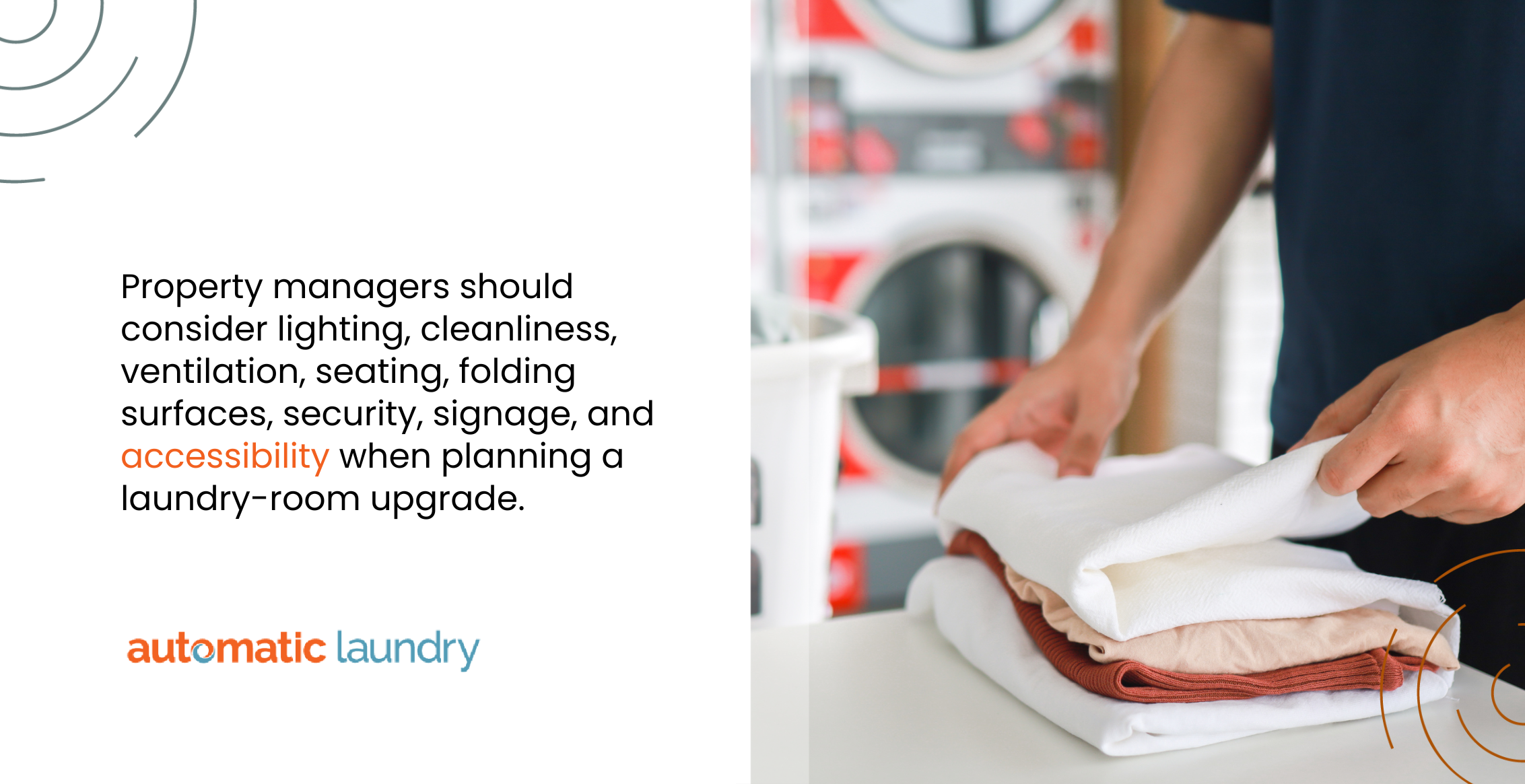
Property managers should consider lighting, cleanliness, ventilation, seating, folding surfaces, security, signage, and accessibility when planning a laundry-room upgrade.
These improvements don’t always require major construction. Better lighting, clear instructions, comfortable seating, organized folding areas, and consistent cleaning can make a noticeable difference.
Smart laundry technology complements those improvements. Residents can check machine availability before visiting the room, receive cycle notifications, and make payments from their phones.
That combination turns a basic utility space into a more convenient and appealing resident amenity. Since residents use laundry facilities regularly, the condition of the room influences their overall perception of the property.
How property managers can prepare for 2036
Modernizing a laundry room doesn’t require replacing every machine at once. A phased approach can help property managers prioritize investments based on immediate needs and available budgets.
Start by reviewing equipment age, service history, downtime, resident complaints, usage patterns, payment methods, utility costs, and laundry capacity.
Then identify the biggest opportunities.
- Upgrade aging equipment. Replace machines with frequent service issues or insufficient capacity.
- Consider cashless laundry payments. Digital options can improve convenience and reduce coin-related administrative work.
- Explore connected washers and dryers. Smart equipment can provide machine status, notifications, and service information.
- Prioritize energy efficiency. Consider water and energy consumption alongside purchase price and expected lifespan.
- Improve the physical space. Focus on lighting, cleanliness, folding areas, ventilation, seating, and clear signage.
- Create a replacement plan. Budget for equipment upgrades before multiple machines reach the end of their useful lives.
A property with frequent payment complaints benefits the most from a cashless payment system. A community with aging equipment may need energy-efficient washers and dryers. A high-density property with heavy laundry demand may benefit from additional capacity or connected equipment.
Build a laundry room ready for the future
The laundry room of 2036 will likely combine smart washers and dryers, digital payments, useful operating data, energy efficiency, proactive maintenance, and thoughtful design.
For property managers, those improvements can create value in several ways. Residents get a more convenient experience. Maintenance teams gain better information. Owners can make more informed equipment and budget decisions. Efficient machines may help manage resource consumption, while a well-designed laundry room can strengthen the property’s amenity offering.
Modernization doesn’t have to happen all at once. The best approach is to identify the property’s biggest challenges, prioritize improvements, and build a practical plan for the years ahead.
A smart washer and dryer may be at the center of the laundry room of 2036, but the larger opportunity is creating a space that works better for residents, property teams, and owners.
Ready to modernize your property’s laundry room? Explore smart commercial laundry equipment, cashless payment systems, energy-efficient washers and dryers, and service solutions designed to create a more convenient and efficient laundry experience.
