


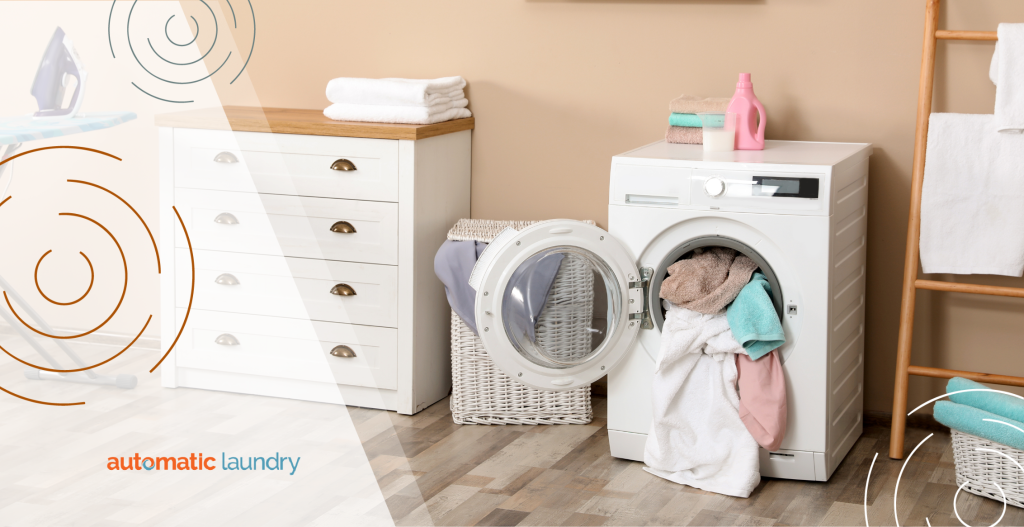
A smart clothes dryer uses moisture sensors to detect when your laundry is dry, eliminating the frustration of over-dried or still-damp clothes.
Moisture sensors are electronic components that detect dampness levels inside the dryer drum. They’re typically installed as metal strips or bars mounted inside the drum where they contact tumbling clothes. The basic principle is straightforward. Wet clothes conduct electricity better than dry clothes, which allows sensors to measure moisture content as the load tumbles. Sensor data gets sent to the control board, which adjusts or ends the cycle automatically based on what the sensors detect.
This technology is standard in modern dryers because it improves efficiency, protects fabrics, and saves energy. Understanding how these sensors work helps you make the most of your laundry routine and appreciate the advanced equipment in your building.
How sensor drying works
Modern dryers with moisture sensors operate differently than older timed models that run for a fixed duration regardless of actual dryness. These advanced systems continuously monitor your laundry throughout the entire cycle, making real-time adjustments that improve results and efficiency.
The technology relies on sophisticated detection methods that measure moisture levels as clothes tumble, then communicate this information to the dryer’s control system. This constant feedback loop allows the machine to respond dynamically to changing conditions inside the drum. Different sensor types employ various detection methods, but all aim to determine exactly when clothes reach the desired dryness level.
Sensor-equipped dryers deliver superior performance compared to basic timed drying. The automatic adjustment capability means your dryer extends or shortens cycles based on actual need rather than arbitrary time settings.
Why choose a smart clothes dryer with moisture sensors?
Energy efficiency stands out as the primary benefit of a smart clothes dryer. ENERGY STAR certified dryers with sensors use 15 to 20 percent less energy than standard models without this technology. Fabric protection matters, too. Sensors prevent over-drying that causes shrinkage, wear, and damage to your clothes over time.
Time savings add up quickly. Cycles finish when clothes are dry, not when an arbitrary timer runs out. Cost savings result from reduced energy consumption, lowering utility bills for property owners and residents alike. Consistent results eliminate guesswork and the need for manual re-drying, making laundry day less frustrating.
Types of moisture sensor technology
Manufacturers have developed several approaches to moisture detection over the years, each with distinct advantages and limitations. The technology has evolved from simple timer-based systems to sophisticated electronic sensors that provide accurate, real-time feedback about laundry conditions.
Different sensor types suit different dryer designs and price points, giving consumers options based on their needs and budget. Conductive sensors dominate the market because they offer the best balance of accuracy and reliability for most applications. Humidity sensors provide a lower-cost alternative that works adequately for basic drying needs. Heat pump dryers represent the cutting edge of efficiency, combining advanced moisture detection with revolutionary heating technology.
Understanding these differences helps you make informed decisions when choosing laundry equipment or evaluating the dryers available in your building. Each technology type serves specific use cases while contributing to the overall goal of smarter, more efficient drying.
- Conductive Sensors (Most Common). Metal strips or bars inside the drum measure electrical conductivity as clothes tumble past them. Wet clothes complete the circuit between sensor contacts while dry clothes break it. You will find this type in most modern residential and commercial dryers because of its reliability and accuracy.
- Humidity Sensors. These measure moisture content in the exhaust air rather than contacting clothes directly. They cost less but deliver less accurate results than conductive sensors. Budget or older dryer models typically use this approach instead of direct-contact sensing.
- Heat Pump Dryer Sensors. Advanced closed-loop systems feature integrated moisture detection alongside heat pump technology. These units reuse heated air after removing moisture, maximizing efficiency beyond what standard dryers achieve. All ENERGY STAR certified heat pump dryers include moisture sensors as a required feature.
Common moisture sensor problems and solutions
Sensor bar buildup ranks as the most frequent issue. Lint, fabric softener residue, or mineral deposits can coat sensors and reduce their accuracy over time. Cleaning sensor bars monthly with rubbing alcohol or a vinegar-dampened cloth restores proper function.
Small loads present another challenge. They may not contact sensors consistently, causing premature cycle endings. Adding a dry towel to small loads improves sensor contact and delivers better results. Mixed fabrics dry at different rates, which can confuse sensors trying to determine overall dryness. Sorting laundry by fabric type solves this problem and improves sensor performance.
Best practices for using sensor-equipped dryers
Clean sensor bars regularly by wiping them monthly to remove residue that interferes with accurate readings. Avoid overloading the drum since clothes need room to tumble and maintain contact with sensors throughout the cycle. Sort laundry by fabric type so similar materials dry together at consistent rates.
Select sensor-dry or auto-dry modes instead of timed dry settings to take full advantage of the technology. Add towels to small loads to improve sensor contact and prevent premature cycle endings. Clean the lint filter after every use to maintain proper airflow and support accurate sensor function.
Ready to experience better drying performance?
Moisture sensor technology represents the standard for modern, efficient laundry equipment. Smart clothes dryer models with sensors deliver consistent results while protecting your clothes and reducing energy costs. Residents in buildings with sensor-equipped dryers enjoy shorter cycles, lower utility bills, and less wear on their wardrobe.
Automatic Laundry installs and maintains modern, sensor-equipped dryers in multi-family properties across eight states. Our 24/7 remote monitoring ensures equipment performs at peak efficiency, giving residents the benefits of smart drying technology without the hassle of maintenance. Learn more about our laundry room management services and discover how upgraded equipment improves the resident experience.
