



Laundry automation gives property managers a smarter way to control utility costs. Paired with cold-water washing, the duo is among the simplest changes that can make a real difference in energy bills. In large properties, laundry is a recurring operating cost that can climb fast when dozens or even hundreds of residents use shared machines every week.
Because most washer energy goes toward heating water, encouraging cold-water cycles can directly lower monthly bills. That matters even more when a property wants to keep expenses predictable while still offering a clean, dependable amenity.
Cold-water washing also helps protect fabrics, keeping clothing in better shape. When you pair that with laundry automation, managers get better visibility into usage patterns, machine performance, and opportunities to improve efficiency across the laundry room. The result is a practical approach that supports budgets, sustainability goals, and resident satisfaction.
Why water temperature matters
Water temperature drives a big share of laundry energy use. It’s one of the easiest places to find savings in large residential properties. About 90% of the energy a clothes washer uses goes toward heating the water. A cold cycle cuts demand far more than a hot water wash. For property managers, that difference matters because shared laundry rooms handle load after load every day. Even a small savings per load can add up across an entire community.
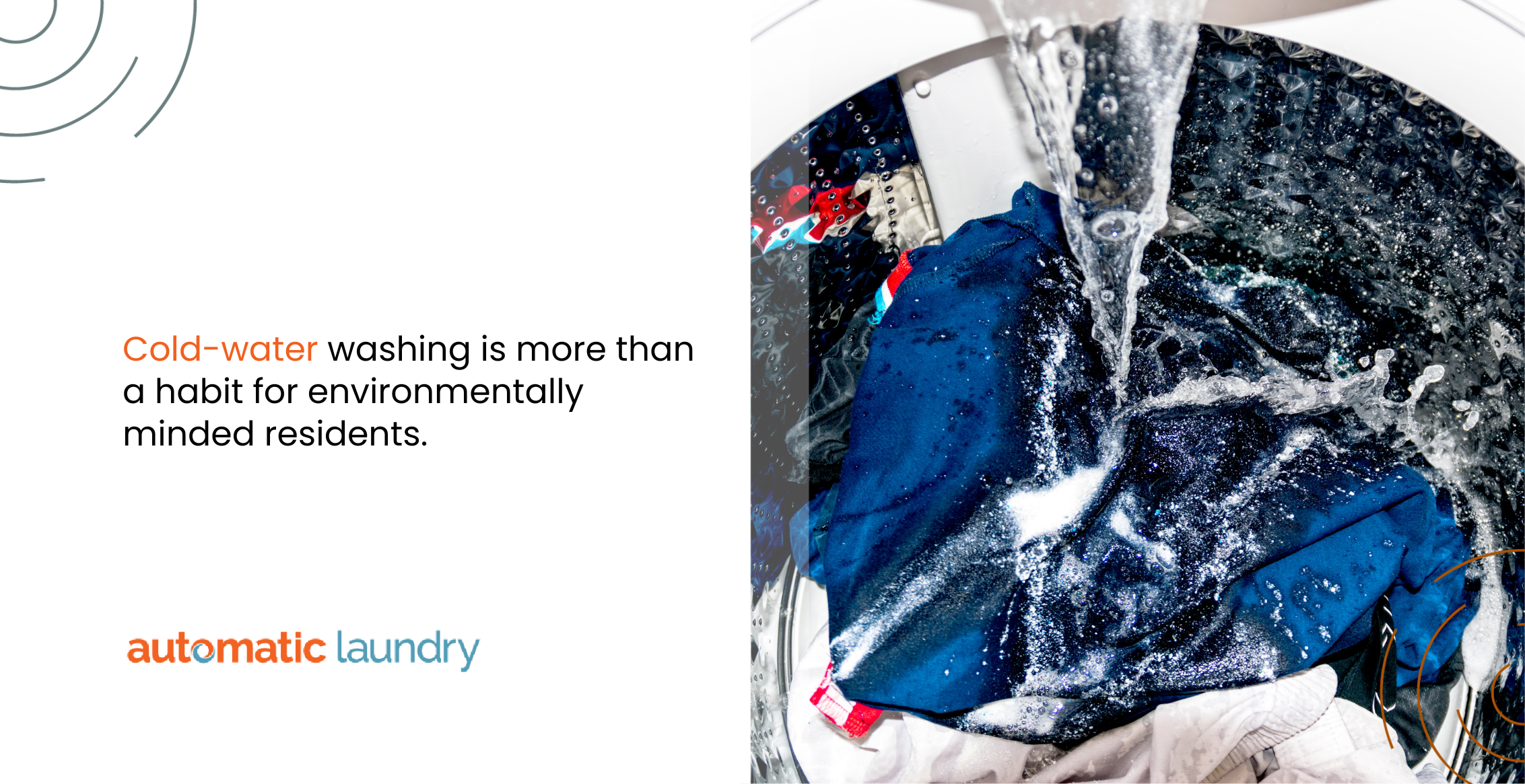
Cold-water washing is more than a habit for environmentally minded residents. It’s a cost-control strategy supporting monthly utility planning and long-term operating goals. In large properties, the total effect of hundreds of loads per month can make this one of the easiest efficiency improvements to promote. Laundry automation helps reinforce that shift by giving managers visibility into usage trends and machine performance.
1 – Laundry automation improves visibility
Laundry automation gives property managers a clearer view of how laundry rooms are being used, which makes it easier to connect resident habits with real operating costs. Connected laundry systems can track machine activity, identify peak use times, and show whether equipment performs as expected. That information matters when the goal is to lower energy bills because it helps managers spot inefficiencies faster.
If residents keep using longer cycles than they need or if a machine starts drawing more energy than expected, the system can point staff toward the issue sooner. This kind of oversight also supports better maintenance planning because property teams can respond before a small problem turns into a costly repair or replacement. In large properties, visibility matters. When laundry automation becomes part of the operation, managers can make decisions based on data instead of guesswork to help the laundry room run more efficiently and keep utility costs predictable.
2 – Cold water helps fabrics last longer
Cold-water washing offers a second financial benefit that often gets overlooked. It can help fabrics last longer. Academic and industry research shows that lower wash temperatures can reduce wear, color loss, shrinking, and microfiber release, which means clothing stays in better shape over time. That matters to property managers because residents notice when their laundry comes out looking faded or worn too quickly. When fabrics last longer, residents may feel more satisfied with the laundry experience and less likely to blame the property for poor results. There’s also an indirect cost benefit. If residents replace clothing less often, they’re less frustrated with repeated laundering and may view the laundry room more positively. Cold-water washing supports a gentler cleaning process that works well for everyday loads, especially when residents use modern detergents designed for cooler cycles. For large properties, that creates a quiet but meaningful advantage that reaches beyond utility savings.
3 – Sustainability supports savings
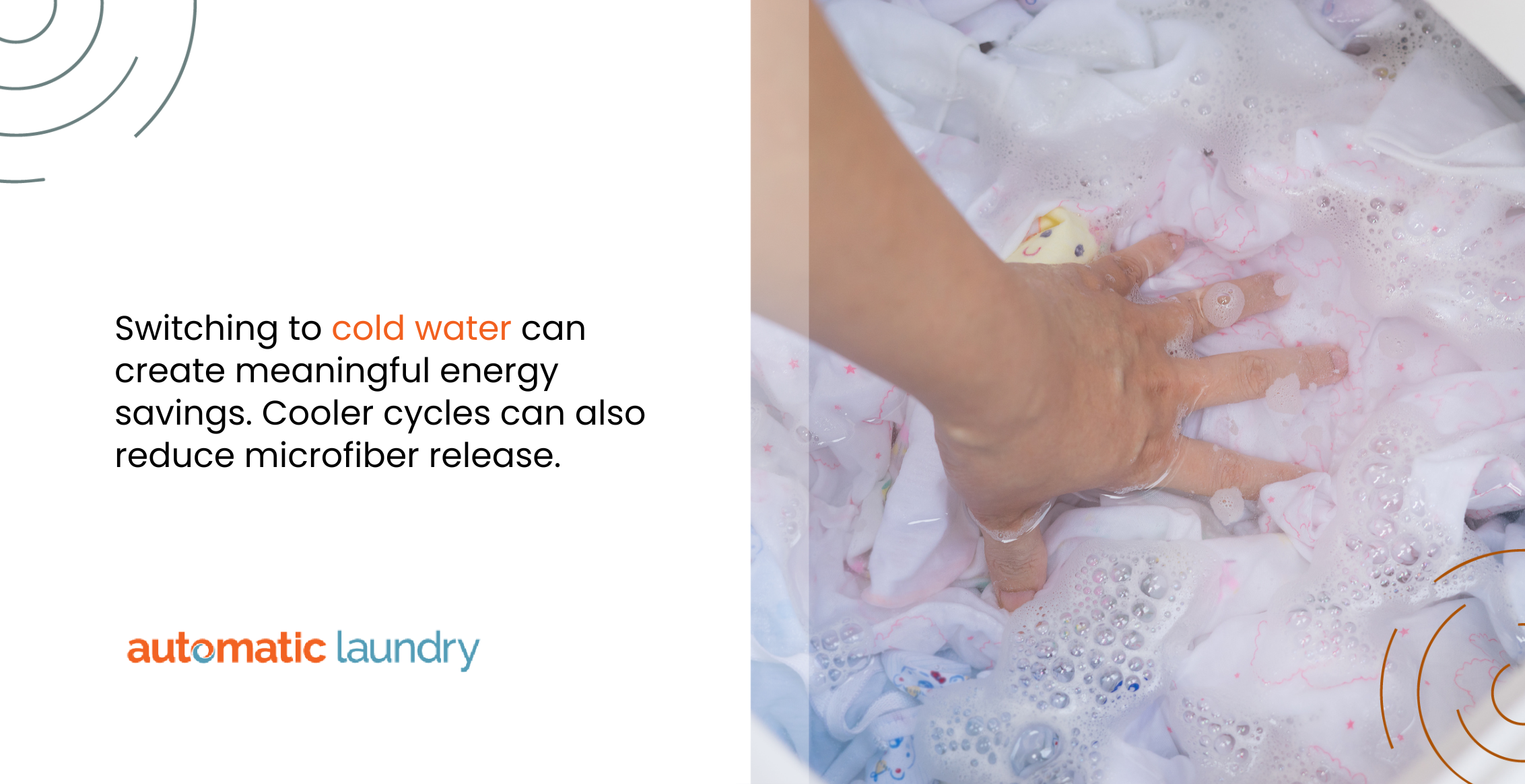
Sustainability goals often get discussed as a separate benefit. However, in large properties, they’re closely tied to financial performance. Cold-water washing lowers energy demand, reducing the property’s carbon footprint while also easing pressure on utility budgets. Switching to cold water can create meaningful energy savings. Cooler cycles can also reduce microfiber release. That makes the practice appealing to property owners who want to improve environmental performance without making laundry more complicated for residents.
Laundry automation strengthens that benefit because it helps managers monitor machine use and identify waste more quickly. When a property combines cold-water washing with connected oversight, the result is a more efficient laundry room that supports both sustainability targets and cost control. Residents also tend to respond well to visible efforts that show the property is making thoughtful operational choices.
4 – Better habits add up
Resident behavior has a real effect on laundry costs, especially in communities with shared machines. Small choices like running full loads, selecting cold water, and using the right cycle can reduce waste and improve overall efficiency. In a large property, those habits matter because every load contributes to the total utility bill.
Property managers don’t need to police every cycle. However, they can encourage smarter habits through signage, resident education, and equipment that makes good choices easier. Keep the message simple and repeat it in places people already look, like move-in packets, laundry room signs, email updates, and resident portals. Laundry automation can support that effort by giving managers data on patterns and machine usage, helping them understand where better habits might have the biggest impact.
This matters because large properties depend on consistency. When residents use the laundry room more thoughtfully, machines run more efficiently, and utility expenses stay more manageable. Cold-water washing becomes more effective when it’s part of a broader operating strategy rather than a one-time suggestion.
Get ready for real savings
Cold-water washing is one of the simplest ways for large properties to lower energy bills without sacrificing laundry quality. When you pair it with laundry automation, it becomes part of a smarter operating model that gives property managers more visibility, more control, and more room to improve efficiency. The combination supports lower utility costs, better fabric care, and stronger sustainability results, all while helping the laundry room feel more modern and dependable for residents.
If your property is ready to take a closer look at laundry costs, Automatic Laundry can help. Their laundry automation solutions are built to give property managers the insight and support they need to run laundry rooms more efficiently. Reach out to Automatic Laundry today to explore options that can help reduce waste, improve oversight, and make cold-water washing work harder for your property.
