



Community laundry solutions play an important role in helping workforce housing residents manage an essential household task close to home. For many residents, a dependable laundry room reduces the time, travel, and stress involved in keeping up with weekly routines.
Workforce housing communities are built around a practical promise. Residents need homes that fit their budgets while still supporting everyday responsibilities. Laundry is one of those responsibilities. An inconvenient, unreliable, or difficult-to-access setup can sour resident satisfaction quickly.
A well-planned shared laundry program makes a meaningful difference. It gives residents a reliable place to wash clothes while helping property managers manage maintenance responsibilities, utility considerations, and resident expectations. For workforce housing communities, the right community laundry solution supports daily convenience without adding unnecessary pressure to operating budgets.
What makes workforce housing laundry needs different?
Workforce housing often serves households whose incomes fall near the middle of a local market. Residents may include teachers, healthcare workers, first responders, retail employees, and other essential members of the community. Many work nontraditional schedules, manage family responsibilities, or need dependable laundry access outside typical daytime hours.
That creates a distinct challenge for property managers. A laundry room with limited access, frequent equipment issues, or long wait times can frustrate residents who can’t easily return at another time. Broken dryers, unclear payment processes, and poor upkeep may also affect how residents view the overall property.
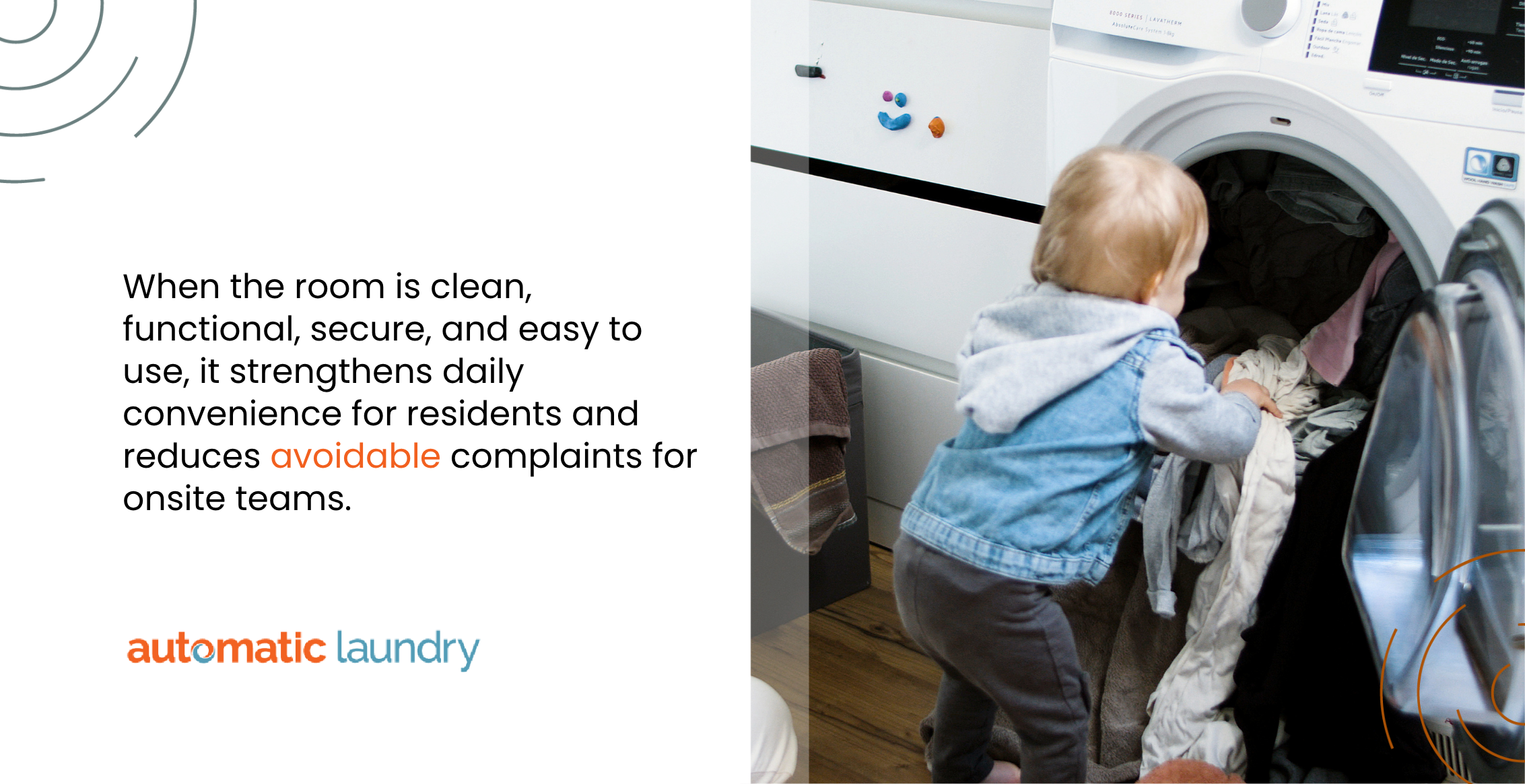
Community laundry should be treated as a core resident service rather than an afterthought. When the room is clean, functional, secure, and easy to use, it strengthens daily convenience for residents and reduces avoidable complaints for onsite teams.
Designing community laundry solutions around resident convenience
The best community laundry room solutions begin with an understanding of how residents will use it. A property with many families may need more machines and larger-capacity equipment. A community serving healthcare, hospitality, or public-safety workers may benefit from access hours that accommodate early mornings, late evenings, and overnight shifts.
Prioritize location. Residents need a laundry room that’s easy to reach from their homes and supported by safe walkways, clear signage, and sufficient lighting. A room that is too far from units or located in an isolated area may discourage use, especially after dark.
Equipment availability matters just as much. Residents shouldn’t have to spend limited free time waiting for a washer or discovering that a dryer is out of service. The right number of machines depends on unit count, household sizes, expected demand, and whether residents have in-unit laundry alternatives.
Convenient payment options remove another common barrier. Mobile payment, reloadable cards, and other cashless systems reduce the need for residents to carry coins. Clear instructions in the community laundry room also help residents understand how to pay, report an issue, or receive service updates.
Folding surfaces, seating, trash receptacles, and clean floors can make the room more comfortable. Residents may not view laundry as a luxury amenity. However, they will notice whether the space works well and receives consistent attention.
Accessibility is a daily necessity
Accessible community spaces support residents with different mobility, sensory, and physical needs. Shared laundry rooms should be part of a property’s broader accessibility planning, especially when a community is being developed, renovated, or modernized.
Property managers should work with qualified accessibility, design, and legal professionals to assess requirements for their individual properties. Applicable standards can vary according to building age, property type, jurisdiction, and renovation scope. Shared areas in multifamily communities – including laundry rooms – may require accessible routes and equipment that residents can reasonably operate.
Practical design choices may include clear paths into the room, adequate space for mobility devices, reachable machine controls, readable instructions, and accessible folding areas. Front-loading machines may also be easier for some residents to load and unload.
Accessibility improves usability for more than residents with disabilities. Parents carrying laundry, older adults, and people recovering from injuries may also benefit from a community laundry room that’s easier to enter, move through, and operate.
Efficient equipment supports better operations
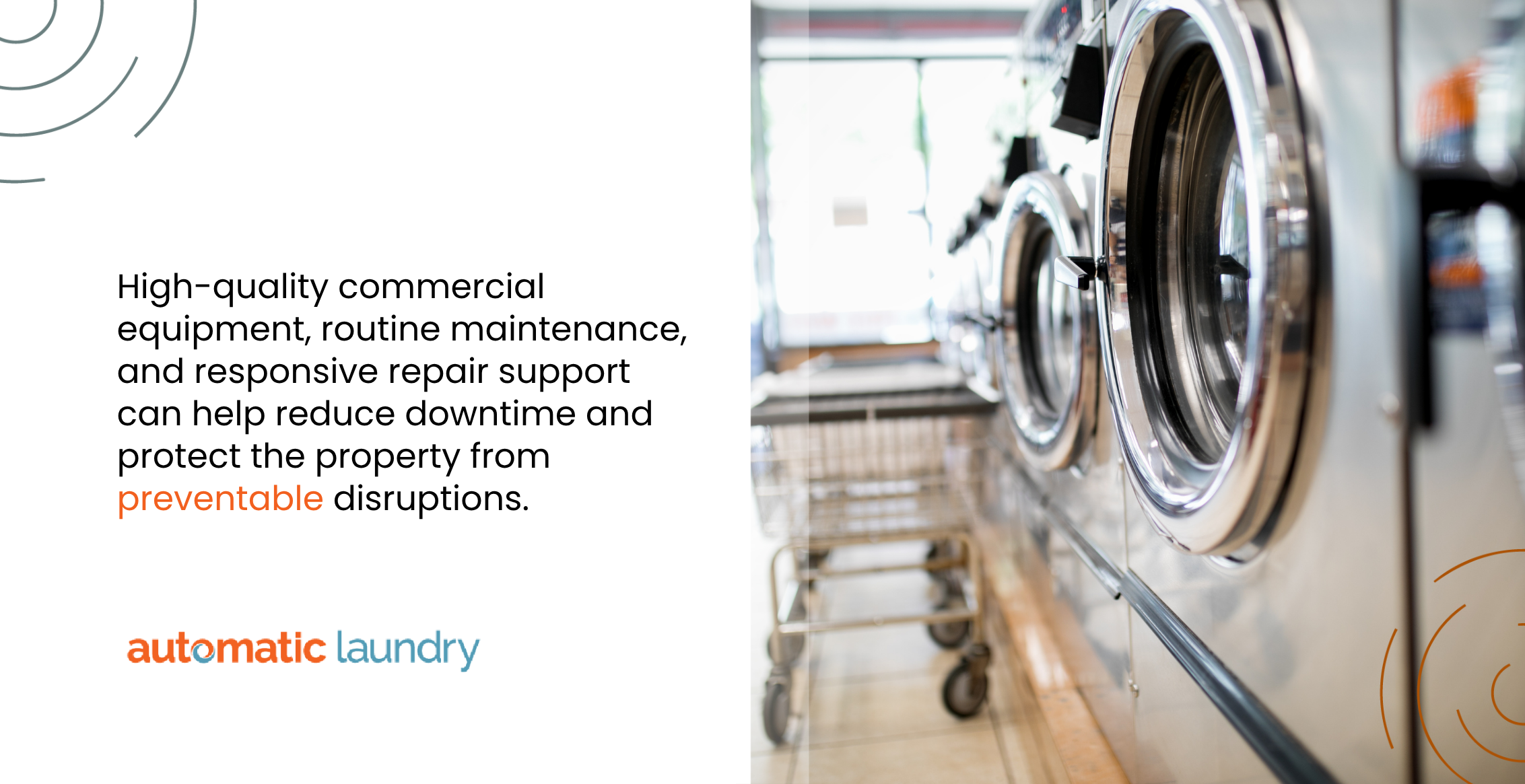
Property managers need community laundry systems that serve residents without creating constant maintenance challenges. High-quality commercial equipment, routine maintenance, and responsive repair support can help reduce downtime and protect the property from preventable disruptions.
ENERGY STAR-certified commercial clothes washers are an important consideration for communities focused on efficient operations. ENERGY STAR reports that certified commercial washers are, on average, 9% more energy efficient and use about 45% less water than standard models. Those reductions matter in multifamily properties where utility consumption affects the operating budget.
Reliable equipment also influences resident satisfaction. A broken washer or dryer can turn a routine task into a major inconvenience, particularly for residents balancing work schedules, childcare, and transportation limitations. Fast service response and proactive maintenance help keep community laundry equipment available when residents need it.
A managed laundry program may provide greater visibility for property teams. Depending on the provider and equipment, managers may access reporting on machine use, service activity, and maintenance needs. That information helps teams evaluate capacity, identify recurring issues, and plan improvements.
Choosing a community laundry partner
A shared laundry provider should offer more than equipment installation. Property managers need a partner that understands multifamily housing and can recommend a community laundry setup that aligns with the property’s size, layout, resident needs, and operational priorities.
Ask potential providers about their service process. Find out who handles repairs, how residents report outages, and what response times the provider targets. Clear service expectations can prevent confusion when a machine needs attention.
Payment options should be part of the discussion. Residents may prefer mobile payment or card-based options, while property managers may want visibility into transactions and equipment performance. The right system should feel straightforward for residents and manageable for staff.
A provider offering professional maintenance, flexible payment technology, and thoughtful room planning can turn a shared laundry space into a more reliable resident service.
Give residents the comfort they deserve
Laundry may be a routine task, but it affects a resident’s sense of comfort and stability at home. When a washer is unavailable, a dryer takes too long, or the room feels unsafe or neglected, residents might feel like their needs don’t matter.
A clean, accessible, and dependable community laundry room sends a different message. It tells residents that their time matters and that their home should support them through the demands of everyday life.
For workforce housing property managers, investing in community laundry is an opportunity to improve resident convenience while supporting smoother operations. Contact Automatic Laundry today to discuss a shared laundry program designed around your property, your residents, and the expectations they bring home each day.
