


A laundry system can have a bigger effect on a building’s sustainability performance than many property teams realize. Water use, energy demand, and equipment efficiency all add up over time, especially in multifamily communities and shared laundry spaces where machines run all day. For property managers, that means the laundry room is not just an amenity. It’s also a measurable part of building operations that can influence utility costs and environmental goals.
Tracking its impact starts with knowing what to measure and identifying the biggest opportunities for improvement. That includes looking at how much water each machine uses, how much electricity or gas the room consumes, and how often equipment runs under less-than-ideal conditions.
It also means paying attention to resident habits, since overloading machines or using the wrong cycles can increase waste. When these factors are measured together, property teams can get a clearer picture of how the laundry room affects overall performance and where smarter changes may pay off.
Why laundry rooms matter for sustainability
Laundry rooms can be easy to overlook when property teams review building operations. However, they often have a steady impact on monthly utility use. A laundry system draws on water, power, and in many cases gas, which makes it one of the more active shared spaces in a property. Each load contributes to the building’s overall environmental footprint, especially when equipment is older or maintenance is inconsistent.
Hot water use can be especially significant because it affects water consumption and the energy needed to heat it. Drying cycles also add to utility demand. Inefficient machines can increase that burden even more. For property managers focused on sustainability, the laundry room offers a useful place to start because changes there can be measured in practical terms.
Better equipment, smarter settings, and clearer resident guidance can all help lower waste. This makes the laundry room a strong candidate for both environmental and financial improvement.
What to track in your laundry room
Before a property team can improve performance, it needs a clear way to measure it.
- The first step is to review water use over time and compare it against laundry room traffic or machine counts.
- Energy use matters, since washers, dryers, and water heaters can all affect monthly totals.
- Maintenance records are also helpful because a machine that needs frequent service may be wasting resources.
- Load frequency can offer another clue, since heavy use does not always mean efficient use.
- Resident behavior matters as well, especially when people run small loads, use high heat, or repeat cycles after mistakes.
When these metrics are considered together, a laundry system becomes easier to evaluate as part of the building’s broader sustainability picture. Property managers do not need a complicated dashboard to begin. A few reliable data points can reveal where waste is happening and where improvements may bring the best return.
Measuring water and energy usage
Once the key data points are in place, property managers can start connecting them to building performance. Water usage can be tracked through utility bills, submetering, or equipment specifications that estimate gallons per cycle. Energy use can be measured in a similar way through utility records or machine data, depending on what is available.
The laundry system should also be reviewed against usage patterns so the team can see whether consumption matches demand. A room with low traffic but high utility use may point to aging equipment or settings that are too demanding. Seasonal changes can matter too, since hotter water use may rise in colder months. Maintenance staff can also help identify leaks, poor drainage, or dryer inefficiency that increase waste.
Property managers who compare these numbers month to month will have a stronger sense of whether the room is improving or drifting in the wrong direction. That makes it easier to prioritize upgrades with real impact.
Ways to improve efficiency
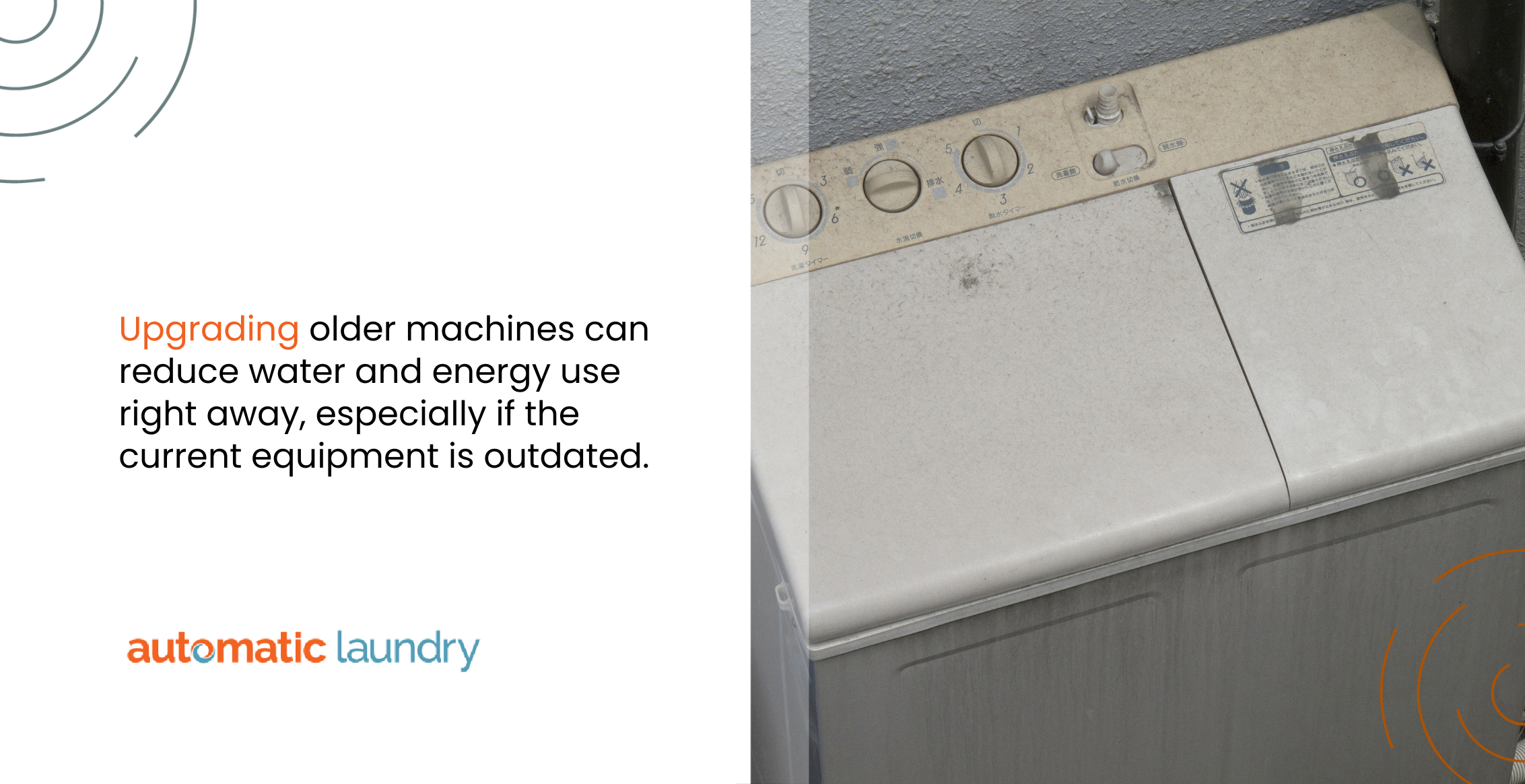
After the baseline is measured, the next step is finding practical ways to improve results. A laundry system often becomes more efficient when property teams focus on a few high-value changes rather than trying to fix everything at once. Upgrading older machines can reduce water and energy use right away, especially if the current equipment is outdated.
Preventive maintenance is another useful step because clogged filters, worn parts, and slow cycles can all waste resources. Property managers can also post simple resident guidance about proper load sizes and cycle selection to cut down on rewashes and excess drying time. If the building uses hot water heavily, reviewing heating practices may also reveal savings. Smart monitoring tools can help teams spot patterns faster and respond before waste grows.
Each of these actions supports a more efficient laundry room, and together they can make a noticeable difference in operating costs and environmental performance.
Start improving your sustainability today
A well-measured laundry system gives property managers a clear way to reduce waste, lower costs, and support building sustainability goals. The key is to start with the basics, then track water use, energy use, equipment condition, and resident habits over time. Even small improvements can lead to better performance when they are applied consistently.
The laundry room may not be the largest part of a property, but it is one of the few areas where environmental impact can be measured and improved with practical changes. That makes it a smart place to focus attention. Partner with Automatic Laundry to create a more efficient laundry system that supports your property’s goals and delivers better results for residents.
